Zero Trust Security Architecture 2027
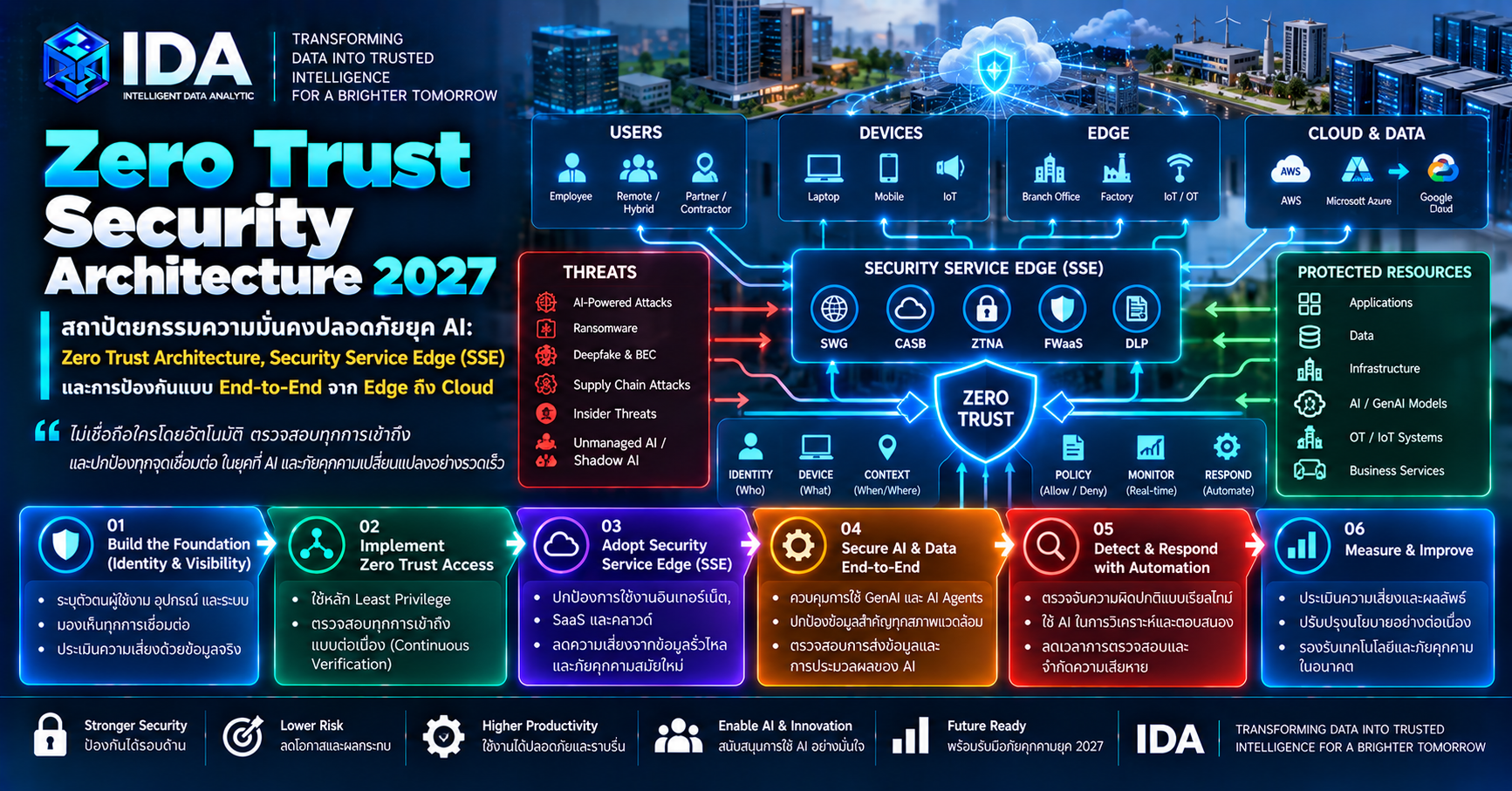
สถาปัตยกรรมความมั่นคงปลอดภัยยุค AI: Zero Trust Architecture, Security Service Edge (SSE) และการป้องกันแบบ End-to-End จาก Edge ถึง Cloud
จาก Network-Centric Security สู่ Identity-Centric, Data-Centric และ AI-Aware Security Architecture
ในอดีต องค์กรมักออกแบบ Cybersecurity โดยมุ่งป้องกันเครือข่ายภายในจากภัยคุกคามภายนอก ด้วย Firewall, VPN, Intrusion Prevention System และ Network Segmentation
แต่เมื่อองค์กรนำ Cloud, SaaS, Hybrid Work, API, Generative AI และ Autonomous AI Agents มาใช้มากขึ้น แนวคิดการแบ่งระบบเป็นเพียงเครือข่ายภายในที่เชื่อถือได้กับเครือข่ายภายนอกที่ไม่น่าเชื่อถือจึงไม่เพียงพอ
คำถามสำคัญของการออกแบบ Security Architecture ในปี 2027 จึงไม่ใช่เพียง
“จะป้องกันไม่ให้ผู้โจมตีเข้ามาในเครือข่ายได้อย่างไร?”
แต่ต้องตอบว่า
Who or What is requesting access → To which resource → Under what context → With what permission → For what purpose → With what level of risk?
การออกแบบสถาปัตยกรรมจึงต้องเปลี่ยนจากการเชื่อถือเครือข่าย ไปสู่การตรวจสอบ Identity, Device, Workload, Application, Data, API และ AI Agent ทุกครั้งที่มีการร้องขอเข้าถึงทรัพยากรตามความเสี่ยงและนโยบายที่กำหนด
1. ความสัมพันธ์ระหว่าง Zero Trust, SSE และ SASE
สามแนวคิดนี้เกี่ยวข้องกัน แต่ไม่ใช่สิ่งเดียวกัน
| Technology | บทบาท | ขอบเขต |
|---|---|---|
| Zero Trust Architecture (ZTA) | หลักการและสถาปัตยกรรมการควบคุมการเข้าถึง | Identity, Device, Resource, Policy, Continuous Evaluation |
| Security Service Edge (SSE) | ชุดบริการรักษาความปลอดภัยผ่าน Cloud | ZTNA, SWG, CASB, DLP และบริการเสริม |
| Secure Access Service Edge (SASE) | การบูรณาการ Networking และ Security | SD-WAN + SSE |
Zero Trust เป็นแนวคิดด้านความปลอดภัย ไม่ใช่ผลิตภัณฑ์ ขณะที่ SSE เป็นกลุ่มความสามารถที่ช่วยบังคับใช้นโยบายการเข้าถึงและป้องกันภัยคุกคาม โดย SASE เพิ่มส่วนของเครือข่าย เช่น SD-WAN เข้ามา
แนวคิด Zero Trust อ้างอิงได้จาก NIST SP 800-207: Zero Trust Architecture ซึ่งเน้นการตัดสินใจอนุญาตการเข้าถึงตามทรัพยากรและบริบท แทนการให้ความเชื่อถือโดยอาศัยตำแหน่งเครือข่ายเพียงอย่างเดียว
2. Reference Architecture: Edge-to-Cloud Security สำหรับยุค AI
Identity & Access Sources
Users
Devices
Workloads
AI Agents
Security Service Edge (SSE)
ZTNA
SWG
CASB
DLP
Policy Enforcement • Threat Protection • Data Controls
Enterprise Applications & Infrastructure
Cloud & SaaS
Data Center / OT
AI / API / Agents
Cross-Cutting Zero Trust Controls
Identity • Policy Engine • Posture • Microsegmentation • Encryption • Telemetry • SOC • Governance
ภาพสถาปัตยกรรมเชิงแนวคิด: การเข้าถึงบางประเภท เช่น Workload-to-Workload และ OT Traffic อาจไม่ผ่าน SSE โดยตรง แต่ต้องมี Policy Enforcement ที่เหมาะสมในเส้นทางนั้น
3. Zero Trust Architecture: 7 องค์ประกอบที่ต้องออกแบบ
| Security Domain | แนวทางควบคุม |
|---|---|
| Identity Security | SSO, MFA, Phishing-resistant Authentication, PAM |
| Device Security | Device Posture, EDR/XDR, Compliance Verification |
| Network Security | Microsegmentation, ZTNA, Network Access Policy |
| Application Security | Secure SDLC, API Security, Application Authorization |
| Data Security | Data Classification, Encryption, DLP, Key Management |
| Workload Security | Cloud Workload Protection, Container Security, Service Identity |
| AI & Agent Security | Agent Identity, Tool Authorization, Model Security, Runtime Governance |
ทั้ง 7 Domain ควรทำงานร่วมกันผ่าน Policy Decision และ Policy Enforcement ที่สามารถประเมินความเสี่ยงและบริบทได้อย่างต่อเนื่อง
ตัวอย่างเช่น พนักงานที่ผ่าน MFA แล้วไม่ควรได้รับสิทธิ์เข้าถึงข้อมูลทุกประเภทโดยอัตโนมัติ หากอุปกรณ์มีความเสี่ยงสูง หรือกำลังร้องขอข้อมูลที่อ่อนไหว ระบบควรสามารถปฏิเสธ จำกัดสิทธิ์ หรือกำหนดให้มีการยืนยันเพิ่มเติม
4. Security Service Edge (SSE): ป้องกันการเข้าถึง Cloud และ SaaS
Zero Trust Network Access (ZTNA)
ให้ผู้ใช้เข้าถึงเฉพาะ Application หรือ Resource ที่ได้รับอนุญาต แทนการเปิดสิทธิ์เข้าถึงเครือข่ายภายในอย่างกว้างขวาง
Secure Web Gateway (SWG)
ตรวจสอบและควบคุม Web Traffic เพื่อช่วยป้องกัน Malware, Phishing และการเข้าถึงเว็บไซต์ที่มีความเสี่ยง
Cloud Access Security Broker (CASB)
เพิ่ม Visibility และการควบคุมการใช้ SaaS รวมถึงการค้นหา Shadow IT และกำกับการเข้าถึงข้อมูลในบริการ Cloud
Data Loss Prevention (DLP)
ลดความเสี่ยงการเปิดเผยข้อมูลสำคัญผ่าน Upload, Download, Sharing หรือการใช้งาน Application ตามความสามารถของแต่ละระบบ
สำหรับยุค Generative AI ควรเพิ่มการควบคุมการใช้งาน AI Applications โดยเฉพาะ เช่น การมองเห็น Shadow AI, การควบคุมการ Upload ข้อมูล และการกำหนดนโยบายสำหรับ AI Services ที่องค์กรอนุญาต
อย่างไรก็ตาม SSE ไม่ได้ทดแทนการรักษาความปลอดภัยทุกส่วนของ Cloud Workload, API หรือ AI Agent ได้ทั้งหมด
5. AI-Aware Security: การขยาย Zero Trust ไปสู่ AI Agents
เมื่อ AI Agent สามารถเชื่อมต่อ API, CRM, ERP, Database และเครื่องมืออื่น ๆ ได้ องค์กรต้องมอง Agent เป็น Non-Human Identity ที่มีสิทธิ์และความรับผิดชอบชัดเจน
ตัวอย่างกระบวนการที่ควรควบคุม:
User Request → Agent Authentication → Policy Evaluation → Data Access → Model Inference → Tool Authorization → Action Approval → Execution → Audit Logging
ความเสี่ยงใหม่ที่ต้องพิจารณา ได้แก่ Prompt Injection, Excessive Agency, Tool Abuse, Agent Impersonation, Token Theft และ Data Exfiltration
มาตรการควบคุมที่จำเป็นประกอบด้วย Agent Registry, Scoped Credentials, Short-lived Tokens, Tool Allowlist, Runtime Monitoring, Human Approval สำหรับการดำเนินการความเสี่ยงสูง และ Kill Switch
หลักการสำคัญคือ AI Agent ไม่ควรได้รับสิทธิ์เท่ากับผู้ใช้ที่มอบหมายงานโดยอัตโนมัติ
6. Defense-in-Depth: การป้องกันจาก Edge ถึง Cloud
การป้องกันแบบ End-to-End ต้องครอบคลุมเส้นทางการทำงานจริงของข้อมูลและระบบ ไม่ใช่เพียงติดตั้ง Firewall หรือ SSE ที่จุดเชื่อมต่อ
| Layer | Security Technology | เป้าหมาย |
|---|---|---|
| Edge | WAF, DDoS Protection, Bot Management | ป้องกันบริการสาธารณะ |
| Access | SSE, ZTNA, IAM, MFA | ควบคุมการเข้าถึง |
| Network | NGFW, IDS/IPS, Segmentation | จำกัดการเคลื่อนย้ายของผู้โจมตี |
| Application | AppSec, API Gateway, Runtime Protection | ป้องกันช่องโหว่และ API Abuse |
| Cloud | CSPM, CWPP, CNAPP, CIEM | ลด Misconfiguration และ Workload Risk |
| Data | Encryption, DLP, DSPM, Backup | ปกป้องข้อมูลสำคัญ |
| AI | Model Security, Agent Identity, Tool Controls | ควบคุม AI และ Autonomous Actions |
| Operations | SIEM, SOAR, XDR, CTI, SOC | ตรวจจับ ตอบสนอง และฟื้นฟู |
7. Roadmap การพัฒนา Zero Trust & SSE ภายใน 12 เดือน
-
เดือน 1–3: Assess & Discover
สำรวจ Identity, Asset, Application, Data Flow, Cloud, SaaS, API และ AI Agents พร้อมประเมิน Zero Trust Maturity และกำหนด Critical Business Services
-
เดือน 4–6: Establish Identity & Access Foundation
ปรับปรุง IAM, MFA, PAM, Device Posture และทดลอง ZTNA กับระบบที่เหมาะสม พร้อมกำหนด Data Classification และ Access Policies
-
เดือน 7–9: Integrate SSE & Cloud Security
ขยาย SWG, CASB, DLP, Cloud Posture Management และ Network Segmentation พร้อมเชื่อม Telemetry เข้ากับ SOC
-
เดือน 10–12: AI Security & Continuous Verification
เพิ่ม Agent Identity, AI Usage Governance, Runtime Monitoring, Policy Automation และทดสอบ Incident Response สำหรับ Cloud และ AI
เป็น Roadmap ตัวอย่าง ระยะเวลาดำเนินงานจริงขึ้นกับความซับซ้อนของระบบเดิม งบประมาณ และความพร้อมขององค์กร
8. Executive Dashboard: วัดผลสถาปัตยกรรมความปลอดภัยอย่างไร
ผู้บริหารไม่ควรวัดความสำเร็จของ Zero Trust จากจำนวน License หรือจำนวนผลิตภัณฑ์ที่ติดตั้ง แต่ควรดูว่าความเสี่ยงลดลงและการควบคุมมีประสิทธิผลจริงหรือไม่
| Executive KPI | สิ่งที่ต้องติดตาม |
|---|---|
| Identity Protection | สัดส่วนบัญชีสำคัญที่ใช้ Phishing-resistant MFA |
| Access Control | สัดส่วน Critical Applications ที่ใช้ Context-based Access |
| Privilege Reduction | จำนวน Excessive Privileges และระยะเวลาที่ใช้เพิกถอนสิทธิ์ |
| Device Trust | สัดส่วน Managed Devices ที่ผ่าน Security Posture |
| Cloud Exposure | จำนวน Critical Misconfigurations ที่ยังไม่ได้แก้ไข |
| Data Protection | เหตุการณ์ Sensitive Data Exposure ที่ตรวจพบ |
| AI Security | สัดส่วน AI Agents ที่ขึ้นทะเบียนและกำหนดสิทธิ์แล้ว |
| Cyber Resilience | MTTD, MTTR, Recovery Testing และ Business Service Availability |
9. จาก Security Architecture สู่ Business Resilience
Zero Trust Architecture และ SSE ไม่ควรถูกมองเป็นเพียงโครงการจัดซื้อเทคโนโลยีของฝ่าย IT แต่เป็นการลงทุนเพื่อเพิ่มความสามารถในการดำเนินธุรกิจอย่างปลอดภัยภายใต้สภาพแวดล้อมที่เปลี่ยนแปลงตลอดเวลา
สำหรับองค์กรที่กำลังเข้าสู่ยุค AI สิ่งที่ต้องสร้างไม่ใช่เพียงระบบที่ป้องกันผู้โจมตีจากภายนอก แต่ต้องสามารถควบคุมการทำงานของ Human Users, Machines, Applications และ AI Agents ภายในขอบเขตที่กำหนดด้วย
Never Trust Implicitly → Verify Explicitly → Enforce Least Privilege → Monitor Continuously → Respond Rapidly → Recover Reliably
เอกสารและมาตรฐานที่ควรศึกษา
ข้อสรุปเชิงยุทธศาสตร์สำหรับปี 2027: สถาปัตยกรรมความปลอดภัยที่เหมาะสมไม่ใช่เพียง Zero Trust + SSE + Cloud Security แต่ต้องเพิ่ม AI & Agent Security, Data Governance, Continuous Threat Intelligence และ Cyber Resilience ให้เป็นส่วนหนึ่งของการออกแบบตั้งแต่ต้น
Secure Identity → Secure Access → Secure Application → Secure Data → Secure AI → Trusted Operations → Business Resilience
อาจารย์ ปรเมศร์ เพียรสกุล
ประธานเจ้าหน้าที่บริหาร (Chief Executive Officer)
บริษัท อินเทลลิเจนท์ ดาต้า อนาไลติกส์ จำกัด (IDA)
CEO | AI, Cybersecurity & Digital Risk Strategist
Digital Crisis & Reputation Management
Certified AI Governance Professional (AIGP) | Data Protection Officer (DPO)
เกี่ยวกับผู้เขียน
Poramate Piansakul
Professional Certifications
Transforming Data into Trusted Intelligence for Executive Decision-Making
Intelligent Data Analytic (IDA)
Transform Data into Intelligence, Insights & Impact.
เปลี่ยนข้อมูลมหาศาลให้เป็น Intelligence ที่ผู้บริหารใช้ตัดสินใจได้ ตั้งแต่การเข้าใจสถานการณ์ ตรวจจับความเสี่ยง คาดการณ์แนวโน้ม ไปจนถึงสนับสนุนการตัดสินใจและการบริหารวิกฤต
#ZeroTrust #SecurityArchitecture #CloudSecurity #AgenticAISecurity #IDA