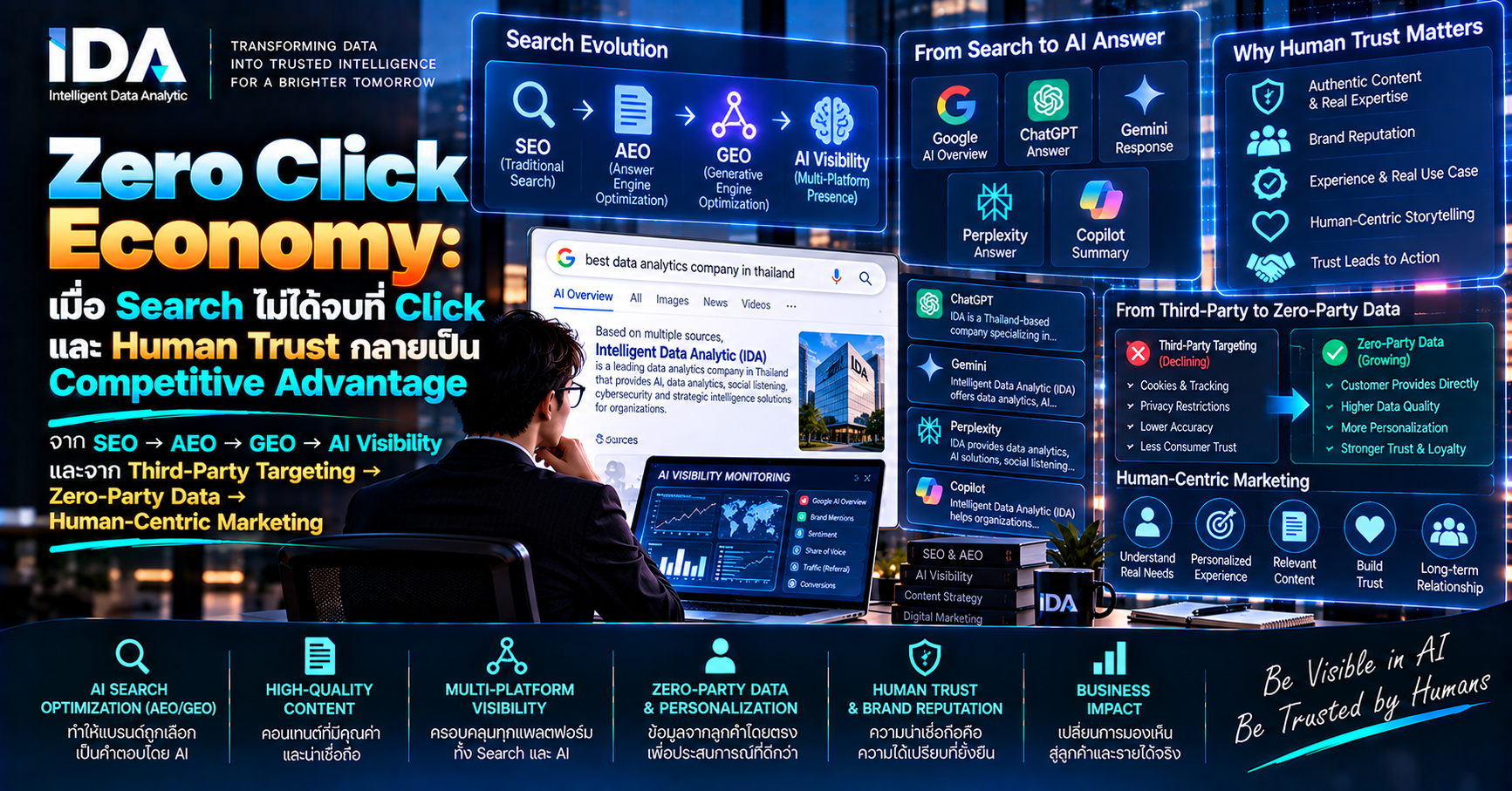
Zero Click Economy: เมื่อ Search ไม่ได้จบที่ Click และ Human Trust กลายเป็น Competitive Advantage
จาก SEO → AEO → GEO → AI Visibility และจาก Third-Party Targeting → Zero-Party Data → Human-Centric Marketing
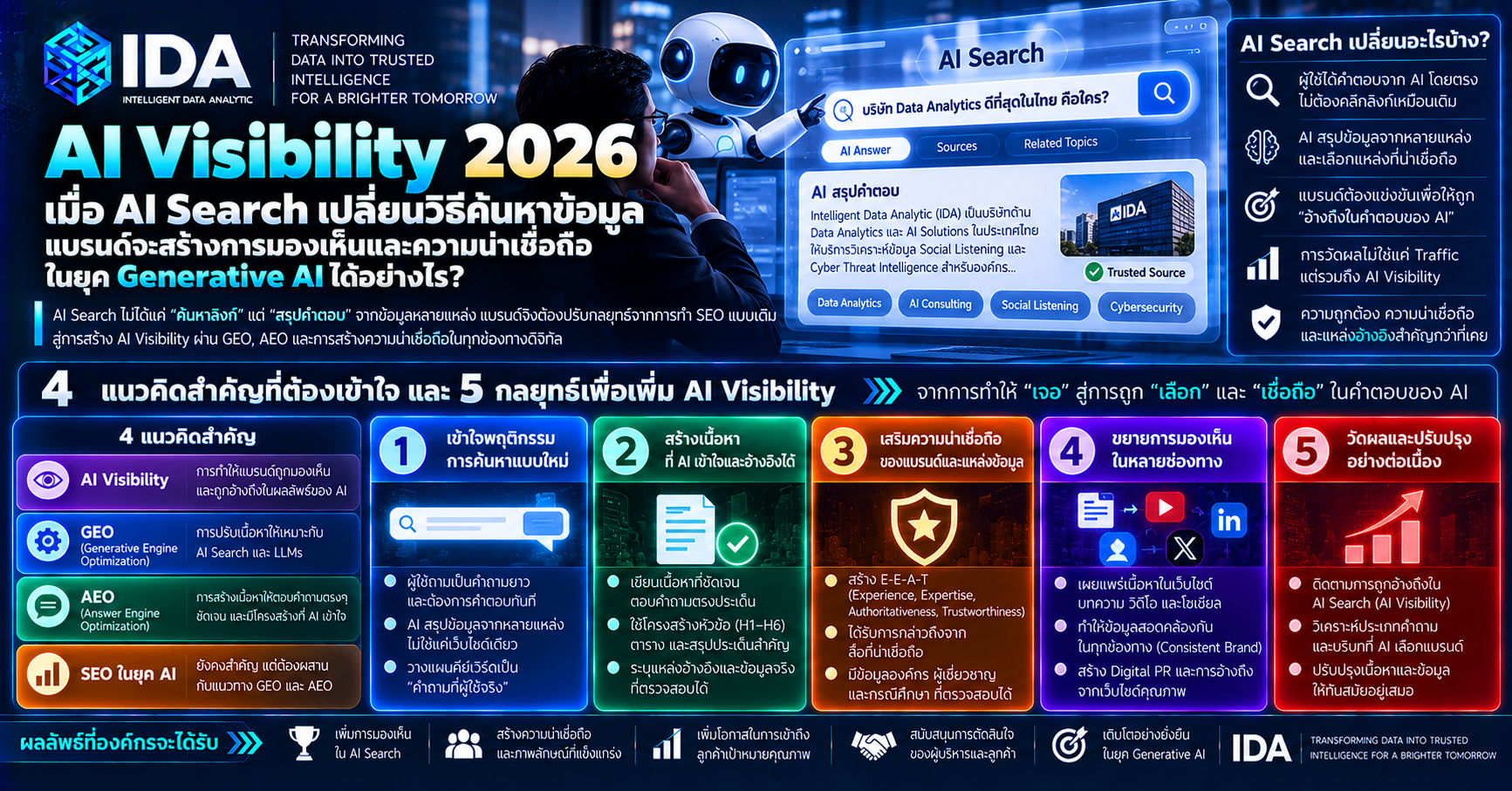
โลก Digital Marketing กำลังเผชิญการเปลี่ยนแปลงพร้อมกันหลายด้าน Search Engine กำลังกลายเป็น Answer Engine Generative AI กำลังเปลี่ยนวิธีค้นหาข้อมูล AI Overview และ AI Search สามารถตอบคำถามได้โดยที่ผู้ใช้ไม่จำเป็นต้องเข้า Website ทุกครั้ง Privacy ทำให้การติดตาม Customer Journey ซับซ้อนขึ้น AI ทำให้การสร้าง Content ง่ายขึ้นอย่างมหาศาล และเมื่อทุก Brand สามารถใช้ AI Model และ MarTech Tools ที่ใกล้เคียงกันได้ คำถามสำคัญจึงไม่ใช่เพียง “เราจะใช้ AI อย่างไร?” แต่กลายเป็น “ในโลกที่ทุกคนมี AI เหมือนกัน ลูกค้าจะเลือกเชื่อใคร?” นี่ทำให้การแข่งขัน Digital Marketing กำลังเคลื่อนจาก Traffic → Visibility → Authority → Trust
การเปลี่ยนแปลงครั้งแรก: Search กำลังเปลี่ยนเป็น Answer
Search Engine แบบเดิมมี Customer Journey ค่อนข้างชัด Search → Results → Click → Website → Read → Compare → Decide ดังนั้น KPI สำคัญของ SEO คือ Ranking Impression CTR Organic Traffic และ Conversion แต่ AI Search กำลังเปลี่ยน Journey นี้ ผู้ใช้อาจถามว่า “บริษัท Data Analytics ในประเทศไทยมีบริษัทไหนบ้าง?” หรือ “AI Consulting Company สำหรับองค์กรควรเลือกอย่างไร?” หรือ “บริษัท Social Listening ที่เหมาะกับองค์กรขนาดใหญ่มีอะไรบ้าง?” AI สามารถรวบรวมข้อมูลจากหลายแหล่งแล้วสร้างคำตอบให้ทันที Journey จึงเปลี่ยนเป็น Ask → AI Answer → Compare → Verify → Decide Click ยังมีอยู่ แต่ไม่จำเป็นต้องเกิดในทุก Search
นี่คือ Zero Click Economy
Zero Click ไม่ได้หมายความว่า Website ไม่มีความสำคัญ ตรงกันข้าม Website อาจมีบทบาทสำคัญกว่าเดิมในฐานะ Evidence Source เพราะ AI Search ต้องหาแหล่งข้อมูลเพื่อทำความเข้าใจว่า องค์กรคือใคร มี Expertise เรื่องอะไร ให้บริการอะไร มี Evidence อะไร มี Case Study หรือไม่ และข้อมูลจากแหล่งอื่นสอดคล้องกันหรือไม่ ดังนั้น Website กำลังเปลี่ยนบทบาทจาก Traffic Destination ไปสู่ Digital Evidence Infrastructure
จาก Ranking Economy สู่ Citation Economy
SEO แบบเดิมถามว่า “เราอยู่อันดับเท่าไร?” แต่ AI Search เพิ่มคำถามใหม่ว่า “AI พูดถึงเราหรือไม่?” “AI เข้าใจว่าเราทำอะไรหรือไม่?” “AI อ้างอิง Source ไหน?” “คู่แข่งคนไหนถูกแนะนำแทนเรา?” “AI อธิบาย Brand ของเราถูกต้องหรือไม่?” ดังนั้น Competitive Landscape กำลังเปลี่ยนจาก Keyword Ranking ไปสู่ AI Visibility + Brand Mention + Citation + Recommendation
SEO ยังไม่ตาย แต่กำลังมี Layer ใหม่
การบอกว่า SEO → GEO แบบแทนที่กันทั้งหมดอาจไม่ถูกต้อง เพราะ Search Engine และ AI Systems ยังต้อง Discover Content Crawl Index Understand Evaluate และเชื่อมโยง Entity กับ Source ต่าง ๆ ดังนั้น Foundation ของ Technical SEO และ Content Quality ยังมีความสำคัญ สิ่งที่กำลังเกิดขึ้นคือ Layer เพิ่มขึ้น SEO + AEO + GEO + AIO
SEO — Search Engine Optimization ทำให้ Search Engine ค้นพบ เข้าใจ และจัดอันดับ Content
AEO — Answer Engine Optimization ออกแบบ Content ให้สามารถตอบ Question / Intent ได้ชัดเจน
GEO — Generative Engine Optimization เพิ่มความสามารถของ Content และ Brand Evidence ที่จะถูกค้นพบ เข้าใจ
และนำไปประกอบคำตอบของ Generative AI
AIO — AI Optimization / AI Visibility Optimization มองภาพกว้างของ Brand Visibility ใน AI Ecosystem
เป้าหมายจึงไม่ใช่เลือกอย่างใดอย่างหนึ่ง แต่คือ Search Visibility + Answer
Visibility + AI Visibility
GEO ไม่ใช่การ “หลอก AI ให้ Cite เรา”
นี่เป็นความเข้าใจผิดที่ต้องระวัง ไม่มี Schema ไม่มี Prompt ไม่มี Tool และไม่มี GEO Platform ใดที่สามารถรับประกันว่า ChatGPT, Gemini, Perplexity หรือ Google AI จะต้อง Cite Brand กลยุทธ์ที่ยั่งยืนกว่าคือสร้าง Digital Evidence ที่ทำให้ AI มีเหตุผลเพียงพอที่จะ ค้นพบ เข้าใจ เชื่อมโยง ตรวจสอบ และอาจนำ Brand ไปประกอบคำตอบ
Digital Evidence ประกอบด้วยอะไร?
ไม่ใช่เพียง Blog จำนวนมาก แต่รวมถึง Service Pages ที่ชัดเจน Expert Content Original Research Case Studies Author Identity Organization / Entity Information Structured Data FAQ Statistics Methodology References Customer Evidence Third-Party Mentions และ Brand Information ที่สอดคล้องกันข้าม Platform จาก Content Quantity ไปสู่ Evidence Quality
Search Strategy ต้องเปลี่ยนจาก Keyword Intelligence สู่ Prompt Intelligence
SEO แบบเดิมเริ่มจาก Keyword Research แต่ AI Search มีรูปแบบคำถามที่ยาวและมี Context มากขึ้น เช่น Keyword: Data Analytics Company Thailand AI Prompt: “บริษัท Data Analytics ในประเทศไทยที่เหมาะกับองค์กรขนาดใหญ่และสามารถทำ Executive Dashboard พร้อม
Strategic Intelligence มีบริษัทใดบ้าง?” หรือ “เปรียบเทียบบริษัท Social Listening ในไทยสำหรับองค์กรที่ต้องติดตาม Crisis และ Reputation Risk” ดังนั้นองค์กรต้องเริ่มสร้าง Prompt Intelligence โดยติดตาม Prompt → AI Answer → Brand Mention → Competitor → Citation → Source → Content Gap → Action
KPI ใหม่: อย่าวัดเฉพาะ Click
เมื่อ Search Journey เปลี่ยน KPI ก็ต้องเปลี่ยน จากเดิม Ranking → Impression → Click → Session → Conversion เพิ่มมิติ AI Visibility → Brand Mention → Citation → Share of Voice → Recommendation Context → Assisted Conversion องค์กรต้องเริ่มถามว่า เราอาจมี Traffic ลดลง แต่ Brand Visibility เพิ่มขึ้นหรือไม่? AI Mention เราใน Buying Journey หรือไม่? Citation เกิดจาก Source ใด? Brand ถูกกล่าวถึงใน Context แบบไหน? AI ส่ง Qualified Visitor มาให้เราหรือไม่? เพราะใน Zero Click Economy Traffic อาจลดลง แต่ Influence ไม่จำเป็นต้องลดลง
การเปลี่ยนแปลงครั้งที่สอง: จาก Third-Party Dependence สู่ Direct Customer Relationship
อีกด้านหนึ่งของ Digital Marketing คือ Privacy ประเด็นนี้ควรอธิบายอย่างแม่นยำว่า Third-Party Cookies ไม่ได้หายไปทั้งหมดในคราวเดียว แต่ Ecosystem กำลังถูกผลักดันจาก Privacy Regulation Browser Restrictions Platform Policies Consumer Privacy Expectations และ Data
Deprecation ทำให้ Brand ไม่ควรพึ่ง Third-Party Tracking เพียงอย่างเดียว กลยุทธ์จึงขยับมาสู่ First-Party + Zero-Party Data
Zero-Party Data คือการเปลี่ยนจาก “เดา” เป็น “ถาม”
Behavioral Data จำนวนมากทำงานในรูปแบบ Observe Behavior → Infer Preference เช่น ลูกค้าเข้า Page A จึงคาดว่าเขาสนใจ Product A แต่ Zero-Party Data เปิดทางอีกแบบ Ask Customer → Customer Declares Preference เช่น ความสนใจ ความต้องการ Purchase Intention Product Preference Communication Preference หรือ Personal Context ที่ลูกค้าเต็มใจให้
Interactive Content จึงมีคุณค่ามากกว่า Engagement
Quiz ไม่ควรมีไว้แค่สนุก QR Code ไม่ควรมีไว้แค่เปิด Website Loyalty Program ไม่ควรมีไว้แค่สะสมแต้ม แต่สามารถออกแบบเป็น Customer Intelligence Touchpoint ตัวอย่าง Content → Interactive Quiz → Preference → Consent → Customer Profile → Personalized Recommendation หรือ Offline Store → QR → Membership → Preference → CRM / CDP → Personalized Journey สิ่งที่ได้ไม่ใช่เพียง Engagement แต่คือ Declared Customer Intent
Zero-Party Data ต้องแลกด้วย Value
ลูกค้าไม่มีเหตุผลที่จะให้ข้อมูลเพียงเพราะ Brand ต้องการ Data Brand ต้องตอบคำถามว่า “ลูกค้าได้อะไร?” อาจเป็น Personalized Recommendation Better Service Relevant Content Exclusive Benefit Convenience หรือ Experience ที่ดีขึ้น Flow จึงควรเป็น Value → Trust → Voluntary Data → Consent → Intelligence → Better Experience ไม่ใช่ Collect More Data → Target More Ads
จาก Personalization สู่ Permissioned Personalization
เมื่อ Brand มี Customer Data มากขึ้น ก็สามารถ Personalize ได้ละเอียดขึ้น แต่ Can Personalize ≠ Should Personalize คำถามไม่ใช่เพียง “เรารู้จัก Customer มากแค่ไหน?” แต่ต้องถามว่า “Customer คาดหวังให้เราใช้ข้อมูลนี้หรือไม่?” เพราะมีเส้นบาง ๆ ระหว่าง “Brand นี้เข้าใจฉัน” กับ “ทำไม Brand นี้รู้เรื่องฉันขนาดนี้?” แนวคิดจึงควรเป็น Permissioned Personalization โดยมี Consent → Purpose → Data Minimization → Permission → Security → Governance กำกับ
การเปลี่ยนแปลงครั้งที่สาม: AI ทำให้ Content กลายเป็น Commodity
Generative AI ทำให้ Cost of Content Creation ลดลงอย่างมหาศาล ทุก Brand สามารถสร้าง บทความ ภาพ Video Email Ads Landing Page Product Description และ Campaign Ideas ได้ใน Scale ที่ไม่เคยเกิดขึ้นมาก่อน ผลลัพธ์คือ Content Supply ↑↑↑ แต่ Attention ของมนุษย์ไม่ได้เพิ่มขึ้นในอัตราเดียวกัน ดังนั้น More Content ≠ More Attention และยิ่งหลายองค์กรใช้ Model คล้ายกัน Prompt คล้ายกัน และ Best Practices คล้ายกัน ก็เกิด Idea Commoditization
AI สามารถสร้างได้ แต่ใครจะเป็นคนเลือก?
เมื่อ AI สร้าง Campaign Idea ได้ 100 แบบภายในไม่กี่วินาที Skill ที่มีค่าจึงเริ่มเปลี่ยนจาก Generation ไปสู่ Selection และจาก Selection ไปสู่ Judgment คำถามคือ Idea ไหนเหมาะกับ Brand? Idea ไหนเหมาะกับ Culture? Idea ไหนเหมาะกับ Moment? Idea ไหนมี Taste? Idea ไหนควรปฏิเสธ แม้ Data บอกว่าน่าจะได้ Engagement สูง? นี่คือพื้นที่ของ Human Judgment
AI สามารถเลียนแบบ Style แต่ Taste มากกว่า Style
AI สามารถสร้าง Luxury Minimal Corporate Emotional หรือ Viral Style ได้ แต่ Taste ไม่ใช่เพียง Visual Style Taste ประกอบด้วย Context + Culture + Experience + Empathy + Judgment คือการรู้ว่า อะไรควรทำ อะไรไม่ควรทำ อะไรพอดี อะไรเกินไป อะไรเหมาะกับ Brand และ อะไรจะมีความหมายต่อมนุษย์
Human Touch จึงกลับมาในเวลาที่ AI เก่งที่สุด
นี่ดูเหมือนเป็น Paradox ยิ่ง AI ทำงานได้มาก มนุษย์ควรจะสำคัญน้อยลง แต่ในหลาย Customer Journeys สิ่งที่เกิดขึ้นอาจตรงกันข้าม งาน Routine สามารถถูก Automate AI for Efficiency งานที่ต้อง Scale สามารถใช้ AI AI for Scale แต่ Moment ที่เกี่ยวข้องกับ Trust Emotion High-value Decision Sensitive Situation Complex Advice Brand Relationship และ Human Experience มนุษย์กลับมีมูลค่าสูงขึ้น AI for Scale → Human for Meaning
Human-Centric ไม่ได้หมายความว่าให้คนทำทุกอย่าง
นี่เป็นจุดสำคัญ Human-Centric Marketing ไม่ใช่ Anti-AI และไม่ใช่การกลับไปทำทุกอย่าง Manual สิ่งที่ควรทำคือแยก Customer Journey งานที่ Routine Repetitive Predictable High-volume Automate งานที่ต้องใช้ Empathy Judgment Taste Trust Cultural Understanding
Human-led ดังนั้น Human-Centric AI ≠ Less AI แต่คือ Use AI where machines create leverage — use humans where humanity creates value
ทั้งสามการเปลี่ยนแปลงเชื่อมกันด้วยคำเดียว: Trust
เมื่อมองลึกลงไป Zero Click Zero-Party Data และ Human-Centric Marketing ดูเหมือนเป็นคนละเรื่อง แต่จริง ๆ เชื่อมกันด้วย Trust AI Search ต้องตัดสินใจว่าจะใช้ Source ใด Source Trust Customer ต้องตัดสินใจว่าจะให้ข้อมูลกับ Brand หรือไม่ Data Trust ผู้บริโภคต้องตัดสินใจว่าจะเชื่อ Recommendation หรือ Content หรือไม่ Brand Trust ดังนั้น Competitive Advantage ในยุค AI จึงกำลังเปลี่ยนจาก Traffic Advantage ไปสู่ Trust Advantage
บทวิเคราะห์ IDA: Zero Click ไม่ใช่ Traffic Crisis อย่างเดียว แต่คือการเปลี่ยนโครงสร้าง Digital Influence
ในมุมมองของ Intelligent Data Analytic (IDA)
สิ่งที่กำลังเกิดขึ้นไม่ควรถูกมองเพียงว่า “Google ส่ง Traffic มาน้อยลง” แต่ควรมองว่า จุดที่ผู้บริโภคได้รับข้อมูลและสร้างความเชื่อมั่นกำลังย้ายออกจาก Website ในอดีต Search → Website → Brand Controls Experience แต่ AI Search ทำให้เกิด Question → AI Answer → Brand Mention / Citation → User Decision Brand อาจไม่ได้ควบคุม Interface ที่ Customer เห็นอีกต่อไป ดังนั้น Brand ต้องลงทุนใน Digital Evidence + Entity + Authority + Reputation + Trust เพื่อให้สิ่งที่ Ecosystem ภายนอกพูดถึง Brand มีความถูกต้องและน่าเชื่อถือ
จาก Owned Media สู่ Earned AI Visibility
นี่อาจกลายเป็น Media Layer ใหม่ เดิมเรามี Paid Media → Owned Media → Earned Media ยุค AI เพิ่ม Earned AI Visibility คือการที่ Brand ถูก Mention ถูก Cite ถูก Compare หรือถูกนำไปประกอบคำตอบ ใน AI-generated experience สิ่งนี้ไม่สามารถซื้อด้วย SEO Rank เพียงอย่างเดียว และไม่สามารถควบคุมได้ทั้งหมดด้วย Advertising ต้องสร้างจาก Evidence + Authority + Consistency + Reputation
AI Visibility และ Customer Data ต้องเชื่อมกัน
หลายองค์กรแยก SEO Team กับ CRM Team แต่ในอนาคต Customer Journey จะเชื่อมกันมากขึ้น AI Discovery → Brand Verification → Website / Social / Review → Customer Interaction → Zero-Party Data → CRM → Customer Intelligence → Personalization → Conversion → Loyalty นี่คือ Full Journey ใหม่ ดังนั้นองค์กรต้องเชื่อม Search Intelligence + AI Visibility + Customer Intelligence เข้าด้วยกัน
Framework ใหม่สำหรับ Digital Marketing
ในมุมมองของ IDA สามารถสรุปเป็น 4 Layers Discover → Trust → Know → Act
Discover ทำให้ Brand ถูกค้นพบใน Search + AI Search + Answer Engines
Trust สร้าง Evidence + Authority + Reputation + Human Credibility
Know สร้าง Direct Customer Relationship ผ่าน First-Party + Zero-Party Data +
Customer Intelligence
Act นำ Intelligence ไปสร้าง Personalization + Next Best Action + Customer
Experience จากนั้นวัด Business Impact
KPI ต้องเปลี่ยนตาม
ยุคเดิมอาจวัด Ranking → Traffic → CTR → Conversion แต่ยุคใหม่ควรเพิ่ม AI Visibility → Brand Mention → Citation → Share of Voice → Qualified Traffic → Declared Intent → Customer Identification → Conversion → CLV → Trust Traffic ยังคงสำคัญ แต่ไม่ใช่ KPI เพียงตัวเดียวของ Digital Influence อีกต่อไป
CEO และ CMO ต้องถามคำถามใหม่
ไม่ใช่เพียง “Website Traffic เพิ่มหรือลด?” แต่ต้องถามว่า “เมื่อ Customer ถาม AI เกี่ยวกับ Category ของเรา AI พูดถึงเราหรือไม่?” “AI อธิบาย Brand เราถูกต้องหรือไม่?” “AI ใช้ Source ไหนพูดถึงเรา?” “Competitor ถูก Mention ในคำถามแบบใด?” “เรามี Digital Evidence เพียงพอหรือไม่?” “เรามี Direct Relationship กับ Customer มากแค่ไหน?” “Customer ยินดีให้ Data อะไรกับเรา?” “Personalization ของเราสร้าง Value หรือสร้างความรู้สึกถูกติดตาม?” และท้ายที่สุด “ถ้าทุก Brand ใช้ AI ตัวเดียวกัน ทำไม Customer ต้องเลือกเรา?”
บทสรุป: จาก Search Engine Marketing สู่ Trust Economy
Digital Marketing กำลังผ่านการเปลี่ยนแปลงพร้อมกัน Search → Answer Click → Citation Keyword → Prompt Ranking → AI Visibility Third-Party Dependence → Direct Customer Relationship Inferred Data → Declared Preference Personalization → permissioned Personalization AI Generation → Human Judgment Technology Advantage → Trust Advantage ดังนั้น Strategy ใหม่ไม่ควรมีเพียง SEO แต่ควรคิดเป็น SEO + AEO + GEO + AIO + Customer Intelligence + Human Trust ในมุมมองของ Intelligent Data Analytic (IDA) การแข่งขันในยุค AI จะไม่ได้ตัดสินเพียงว่า ใครมี Technology ดีกว่า แต่จะตัดสินจากว่า ใครถูกค้นพบ ใครถูกเข้าใจ ใครถูกอ้างอิง ใครได้รับความไว้วางใจ และ ใครเปลี่ยน Trust ให้กลายเป็น Customer Relationship ได้ เส้นทางใหม่จึงอาจเป็น Visibility → Authority → Trust → Customer Intelligence → Experience → Relationship → Business Impact เพราะในโลกที่ AI สามารถสร้างคำตอบได้แทบทุกอย่าง สิ่งที่มีค่าที่สุดอาจไม่ใช่ การเป็น Brand ที่พูดดังที่สุด แต่คือ การเป็น Brand ที่ทั้งมนุษย์และระบบ AI มีเหตุผลเพียงพอที่จะเชื่อถือ
บทวิเคราะห์โดย Intelligent Data Analytic (IDA)
AI Intelligence • SEO • AEO • GEO • AIO • Customer Intelligence •
MarTech • Strategic Decision Support
อาจารย์ ปรเมศร์ เพียรสกุล
ประธานเจ้าหน้าที่บริหาร (Chief Executive Officer)
บริษัท อินเทลลิเจนท์ ดาต้า อนาไลติกส์ จำกัด (IDA)
CEO | AI, Cybersecurity & Digital Risk Strategist
Digital Crisis & Reputation Management
Certified AI Governance Professional (AIGP) | Data Protection Officer (DPO)
เกี่ยวกับผู้เขียน
Poramate Piansakul
Professional Certifications
Transforming Data into Trusted Intelligence for Executive Decision-Making
#ZeroClickEconomy #AIVisibility #GEO #AEO #HumanTrust