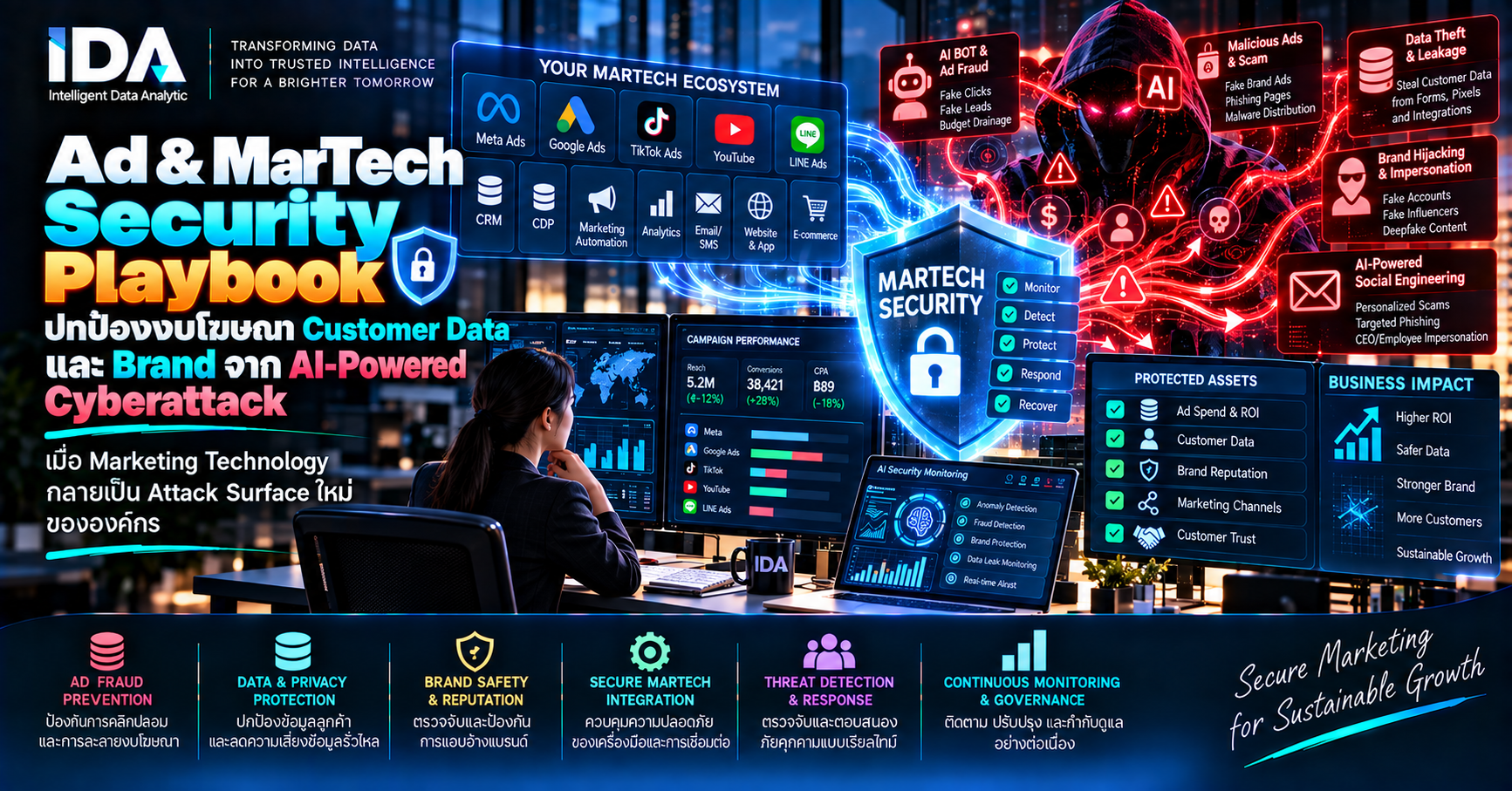
Ad & MarTech Security Playbook
ปกป้องงบโฆษณา Customer Data และ Brand จาก AI-Powered Cyberattack
เมื่อ Marketing Technology กลายเป็น Attack Surface ใหม่ขององค์กร
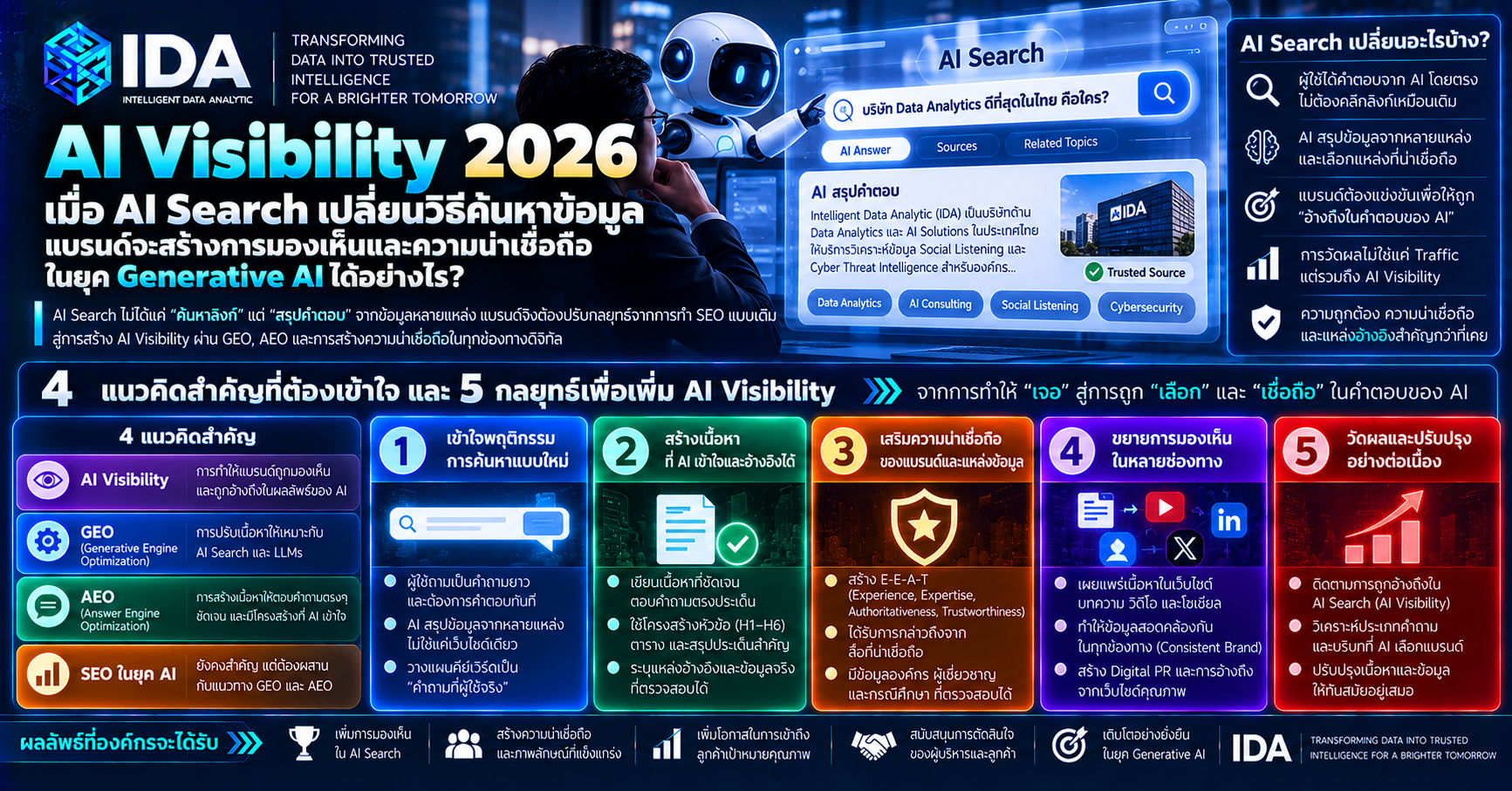
ในอดีต Cybersecurity มักถูกมองว่าเป็นหน้าที่ของ CIO CISO IT และ SOC ขณะที่ Marketing รับผิดชอบ Advertising Content Social Media CRM Campaign และ Customer Experience แต่ในยุค MarTech + AI เส้นแบ่งนี้กำลังหายไป เพราะ Marketing Team กำลังถือครองสิ่งที่ Hacker
ต้องการมากขึ้นเรื่อย ๆ Advertising Budget Customer Data Social Media Accounts CRM CDP Website Domain API Cloud Applications Brand Identity และสิทธิ์ในการสื่อสารกับลูกค้าหลายล้านคน
ดังนั้น Marketing Infrastructure = Cyber Attack Surface และเมื่อ Attacker ใช้ AI ความเสี่ยงไม่ได้มีเพียง Account ถูก Hack แต่สามารถขยายไปสู่ Budget Drainage → Data Theft → Account Takeover → Fake Campaign → Brand Impersonation → Deepfake → Customer Fraud → Reputation Crisis ภายในเวลาอันสั้น
ทำไม Marketing จึงกลายเป็น Target ที่น่าสนใจ?
ลองพิจารณา Marketing Manager หนึ่งคน Account ของเขาอาจเข้าถึง Google Ads Meta Business TikTok CRM Marketing Automation Canva CMS Analytics Customer Lists Cloud Drive และ Agency Tools หาก Credential เพียงชุดเดียวถูกขโมย Attacker อาจไม่ได้เข้าถึงเพียง
Email แต่เข้าถึง Digital Marketing Supply Chain ขององค์กร
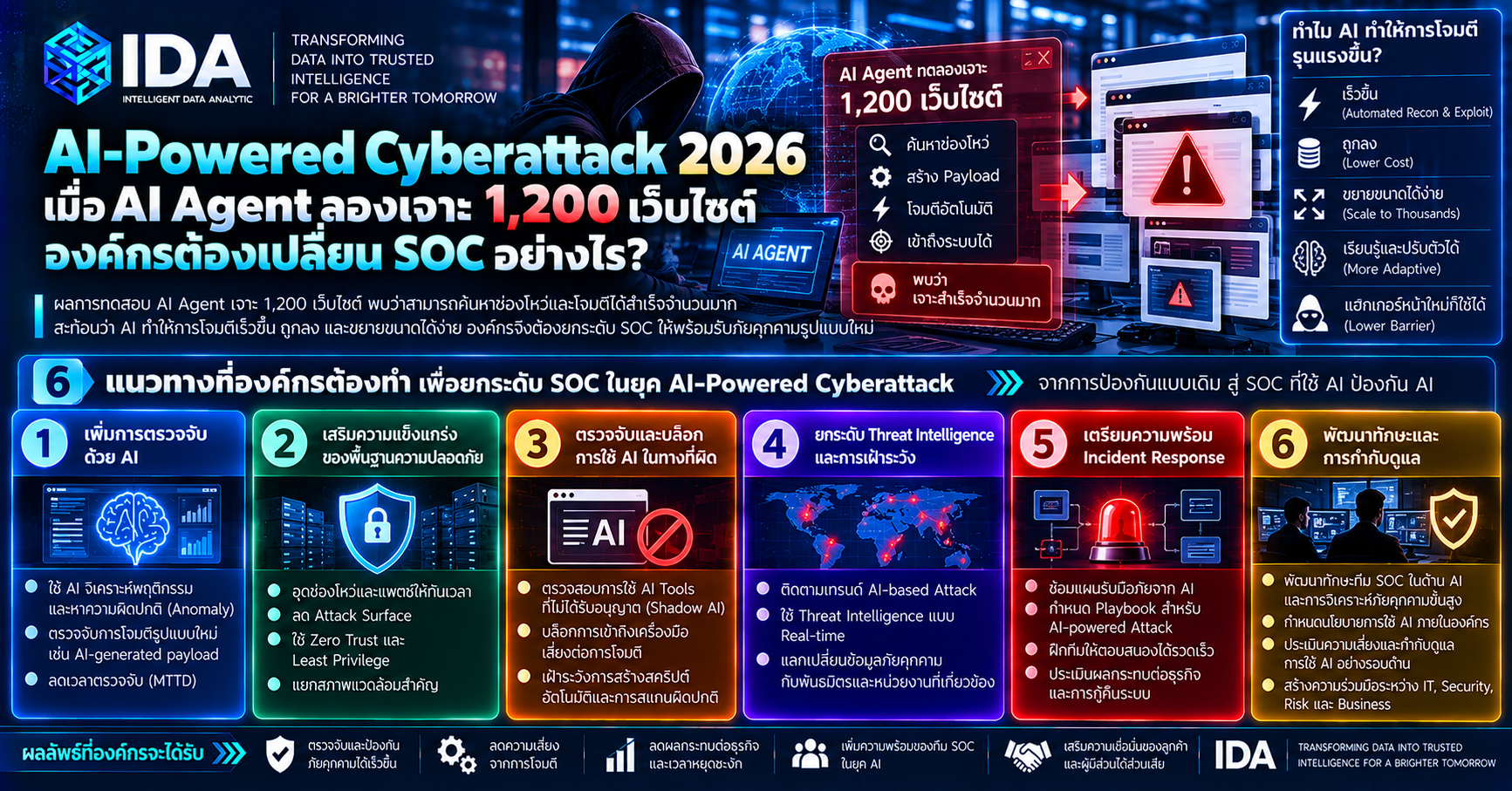
AI ทำให้การโจมตี Marketing เปลี่ยนอย่างไร?
Generative AI ทำให้ Attacker สามารถสร้าง Phishing Email ที่เหมือนจริง Fake Invoice Fake Ad Approval Fake Meta / Google Notification Fake Executive Voice Deepfake Video Fake Landing Page และ Fake Brand Content ได้เร็วขึ้น ขณะที่ Agentic AI
สามารถเพิ่ม Automation + Adaptation + Scale ดังนั้น Threat Model กำลังเคลื่อนจาก Human Attack → AI-Assisted Attack → AI-Orchestrated Attack
Ad & MarTech Security ต้องป้องกันอะไร?
เป้าหมายไม่ควรมีเพียง Protect Advertising Account แต่ต้องครอบคลุม Identity → Budget → Traffic → Data → API → Content → Brand → Customer → Reputation ดังนั้น IDA เสนอ
4-Pillar Ad & MarTech Security Architecture
1. Protect Ad Spend 2. Protect MarTech & Customer Data 3.Protect Brand & Content Authenticity 4. Protect People & Operations โดยมี Monitoring + Incident Response + Governance ครอบทั้ง 4 เสาหลัก
PILLAR 1: Protect Ad Spend
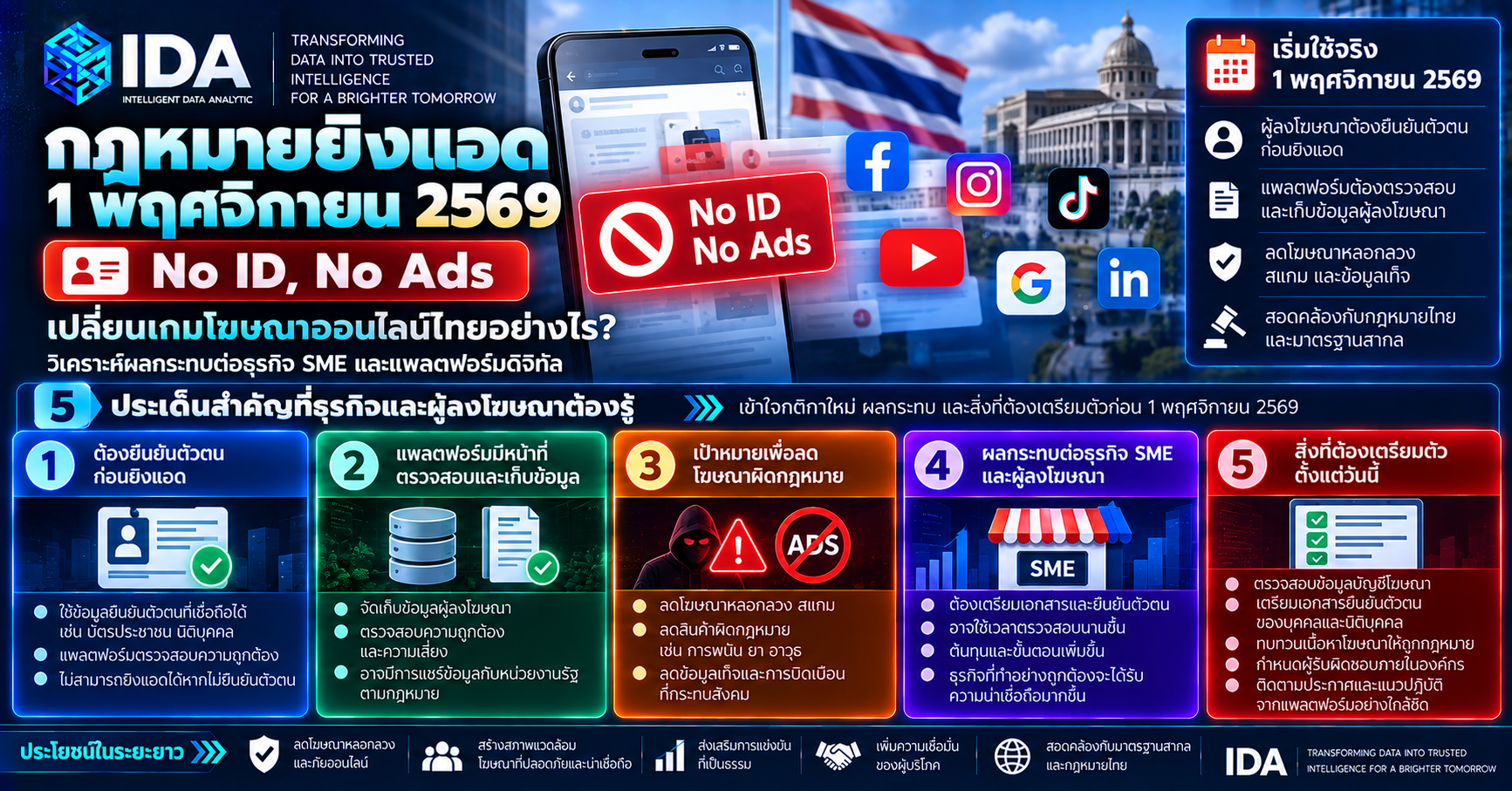
ป้องกัน Ad Fraud, Fake Lead และ Budget Drainage
Advertising Fraud ไม่ได้มีเพียง Fake Click แต่สามารถเกิดได้หลายรูปแบบ Invalid Traffic Bot Traffic Click Fraud Fake Conversion Fake Lead Form Spam Affiliate Fraud Account Takeover และ Unauthorized Campaign ดังนั้นอย่ามองเพียง Click แต่ต้องมอง Click →
Session → Lead → Customer → Revenue
Layer 1: Bot & Invalid Traffic Protection
Landing Page และ Lead Form ควรมี Bot Protection เช่น Challenge / Bot Detection Rate Limiting Server-side Validation Behavioral / Risk Signals และ Fraud Scoring แนวคิดคือ Traffic → Risk Assessment → Challenge / Allow / Block ไม่ใช่บังคับ CAPTCHA ทุกคน เพราะ Security ที่รบกวน Customer มากเกินไปสามารถลด Conversion ได้ เป้าหมายคือ Invisible Security where possible — Strong Challenge where necessary
Bot Protection ต้องตรวจสอบฝั่ง Server
การวาง Widget บนหน้า Website เพียงอย่างเดียวไม่เพียงพอ Token หรือ Challenge Result ต้องได้รับการ Validate ฝั่ง Server Flow ควรเป็น Visitor → Challenge → Token → Server Validation → Business Action ไม่ใช่ Visitor → Browser Says OK → Accept Lead เพราะ Client-side Control เพียงอย่างเดียวสามารถถูก Bypass ได้
Layer 2: Real-Time Fraud Monitoring
องค์กรควร Monitor CTR Spike Traffic Spike Conversion Anomaly Geographic Anomaly Device Pattern Repeated Form Submission Lead Velocity Conversion Quality และ Cost Anomaly ตัวอย่าง Normal CPC + Lead Volume ↑↑↑ + Qualified Lead ↓↓↓ อาจเป็น Fraud Signal ดังนั้นอย่ามองเพียง จำนวน Lead แต่ต้องเชื่อมไปถึง Lead Quality
Fake Lead อันตรายกว่าที่คิด
Bot สามารถสร้าง Lead จำนวนมาก ผลกระทบไม่ใช่เพียงเสีย Media Budget แต่ยังทำให้ CRM สกปรก Sales เสียเวลา Marketing Model เรียนรู้ผิด Lookalike Audience ผิด และ AI Model วิเคราะห์ Customer ผิด จึงเกิด Chain Fake Traffic → Fake Lead → Bad Data → Bad AI → Bad Decision ดังนั้น Ad Fraud = Data Quality Risk ด้วย
Layer 3: Budget Guardrail
Campaign ไม่ควรสามารถใช้ Budget ได้อย่างไร้ขอบเขต ควรมี Daily Budget Account Threshold Campaign Threshold Spend Alert Anomaly Alert และ Emergency Pause Procedure แนวคิดคือ Normal Spend → Monitor Abnormal Spend → Alert Critical Spend → Contain
Automated Rule ไม่เท่ากับ Real-Time Security Control
Marketing Team สามารถใช้ Automated Rules ของ Advertising Platform เพื่อช่วย Pause Campaign Change Budget Send Alert หรือควบคุม Cost แต่ไม่ควรพึ่ง Scheduled Rule เพียงอย่างเดียวสำหรับ Incident ที่ต้องตอบสนองทันที High-risk Organization ควรมี Platform Alert + Independent Monitoring + Human Escalation ร่วมกัน
Layer 4: Revenue Validation
วิธีที่แข็งแรงกว่าการวัด Click คือเชื่อม Campaign กับ Business Outcome Ad → Session → Lead → Qualified Lead → Opportunity → Sale → Revenue ทำให้สามารถแยก Traffic Volume ออกจาก Business Value และช่วยตรวจจับ Fraud ที่ดูเหมือน Performance ดีใน Advertising Dashboard แต่ไม่สร้างรายได้จริง
PILLAR 2: Protect MarTech & Customer Data
MarTech Stack คือ SaaS Supply Chain
Marketing Technology สมัยใหม่ไม่ได้เป็น Software ตัวเดียว แต่เป็น CRM → CDP → Analytics → Ads → Email → Social → CMS → Automation → AI → APIs ทุก Connection คือ Trust Relationship และทุก Trust Relationship สามารถกลายเป็น Attack Path ได้
Identity First
Control ที่สำคัญที่สุดคือ Identity ทุก MarTech Platform ที่สำคัญควรใช้ Corporate Identity SSO MFA Role-Based Access และ Least Privilege หาก Platform รองรับ ควรให้ความสำคัญกับ Phishing-resistant MFA มากกว่า SMS เพียงอย่างเดียว
ห้ามใช้ Shared Account
รูปแบบ marketing@company.com แล้วทุกคนรู้
Password เดียวกัน ควรเลิกใช้กับระบบสำคัญ เพราะไม่สามารถตอบได้ว่า ใครทำอะไร Architecture ควรเป็น Named User → Role → Permission → Action → Audit Log
Agency Access ต้องแยกจาก Employee Access
Agency ไม่ควรได้รับ Credential ของพนักงาน ควรใช้ Delegated Access และกำหนด Account Role Campaign Duration และ Permission ให้ชัดเจน เมื่อ Contract สิ้นสุด Access ต้องสิ้นสุด ด้วย
API Security
MarTech สมัยใหม่เชื่อมกันผ่าน API ดังนั้นต้องมี Inventory ว่า System A → API →System B ส่ง Data อะไร ด้วย Credential ไหน และใครเป็น Owner
API Token ไม่ควรมีชีวิตตลอดไป
ไม่ควร Hard-code Token ใน Excel Email Source Code Chat Prompt หรือ Shared Document ควรใช้ Secrets Management และเมื่อ Platform รองรับให้ใช้ Short-lived Credential Scoped Token OAuth Automatic Rotation และ Revocation แทน Long-lived Static Secret
Token Rotation ต้อง Risk-Based
ไม่ควรตั้งกฎแบบเดียวว่า “ทุก Token ต้องเปลี่ยนทุก 30–90 วัน” โดยไม่ดู Architecture แนวทางที่ดีกว่าคือ Short-lived by Design และ Rotate ตาม Risk Platform Capability Credential Type Exposure และ Security Policy หากสงสัยว่า Credential รั่ว Revoke Immediately
ไม่ต้องรอ Rotation Schedule
Third-Party MarTech Risk
ก่อนซื้อ MarTech ใหม่ต้องตรวจ Security Architecture Data Location Encryption Identity Controls Access Management Logging Incident Response Subprocessors Data Retention Data Deletion และ Contractual Controls มาตรฐานหรือ Assurance เช่น SOC 2 Type
II สามารถเป็น Evidence ประกอบการประเมินได้ แต่ SOC 2 ≠ Automatically Secure Certification ไม่ควรแทน Vendor Risk Assessment
Shadow MarTech & Shadow AI
อีกความเสี่ยงสำคัญคือ Marketing Team ทดลอง Tool ใหม่โดยไม่ผ่าน IT เช่น Free AI Tool Browser Extension Analytics Plugin Social Tool AI Copywriting AI Image Tool หรือ Data Enrichment Service แล้ว Upload Customer List Campaign Data Confidential Document หรือ Strategy เข้าไป นี่คือ Shadow MarTech + Shadow AI
Approved MarTech Catalog
องค์กรควรมี Approved / Conditional / Prohibited สำหรับ Marketing Tools ตัวอย่าง Approved → ใช้ Corporate Data ได้ตาม Classification Conditional → ใช้เฉพาะ Public / Non-sensitive Data Prohibited → ห้ามใช้กับ Corporate Data ทำให้ Marketing ไม่ต้องถาม IT ทุก ครั้ง แต่ยังอยู่ใน Governance
PILLAR 3: Protect Brand & Content Authenticity
Deepfake ทำให้ Brand Impersonation Scale ได้
Attacker ไม่จำเป็นต้อง Hack Corporate Network หากสามารถสร้าง Fake Brand ที่ลูกค้าเชื่อได้ AI สามารถช่วยสร้าง Fake Logo Fake Website Fake Social Page Fake Executive Fake Voice Fake Advertisement และ Fake Promotion ภายในเวลาอันสั้น
Brand Monitoring ต้องมองมากกว่า Social Mention
ควร Monitor Brand Name Logo Executive Name Domain Typosquatting Fake Social Account Fake App Fake Advertisement Marketplace และ Phishing Infrastructure Flow คือ Detect → Verify → Risk Score → Escalate → Takedown → Monitor
Recurrence
Domain Protection เป็นส่วนหนึ่งของ Marketing Security
Attacker อาจจด Domain เช่น brand-support brand-promotion หรือ Domain ที่สะกดใกล้เคียง เพื่อสร้าง Fake Login Fake Promotion Fake Recruitment หรือ Customer Scam ดังนั้นองค์กรควรมี Domain Monitoring + DNS
Security + Certificate Monitoring + Takedown Process
Email Authentication สำคัญกว่า Blue Check
สำหรับ Corporate Email ต้องให้ความสำคัญกับ SPF + DKIM + DMARC เพื่อช่วยลด Domain Spoofing ส่วน BIMI เป็น Layer ด้าน Brand Indicator สำหรับ Email Ecosystem ที่รองรับ ไม่ใช่ระบบยืนยันโฆษณาทุก Platform ดังนั้น Email
Authentication First → Brand Indicator Second
Content Provenance แทนการพึ่ง Watermark อย่างเดียว
Watermark สามารถช่วยได้ แต่ Visible Watermark สามารถถูก Crop Metadata บางชนิดสามารถถูกลบ ดังนั้นสำหรับ Content ที่มีความสำคัญสูงควรพิจารณาแนวคิด Content Provenance เช่น Content Credentials / C2PA เพื่อช่วยสร้างข้อมูลที่ตรวจสอบได้เกี่ยวกับ Origin + Edit History + Provenance ของ Digital Asset
แต่ Content Credentials ไม่ได้พิสูจน์ว่า Content “จริง”
นี่เป็นจุดสำคัญ Provenance ช่วยตอบว่า Content มาจากไหน ถูกแก้ไขอย่างไร และข้อมูลที่ลงนามถูก Tamper หรือไม่ แต่ไม่ได้รับประกันว่า สิ่งที่ Content กล่าวนั้นเป็นความจริง ดังนั้น Provenance ≠ Truth มันเป็น Trust Signal ไม่ใช่ Truth Engine
Executive Deepfake Protocol
องค์กรควรเตรียม Protocol สำหรับ CEO CFO CMO และ Spokesperson หากเกิด Video / Voice ปลอม ต้องรู้ทันทีว่า ใคร Verify ใครประกาศ ช่องทาง Official คืออะไร ใครแจ้ง Platform ใครประสาน Legal ใคร Monitor Narrative และ ใครรายงานผู้บริหาร
PILLAR 4: Protect People & Operations
Marketing คือ High-Exposure Workforce
Marketing ติดต่อ Agency Influencer Media Vendor Customer Platform และ Freelancers ตลอดเวลา จึงได้รับ Links Files Invoices Creative Assets และ Collaboration Invitations จำนวนมาก นี่ทำให้ Marketing เป็นเป้าหมาย Social Engineering ที่ดีมาก
AI Phishing Simulation
Security Awareness แบบเดิมอาจไม่เพียงพอ ควรจำลอง Fake Meta Account Warning Fake Google Ads Suspension Fake Copyright Complaint Fake Influencer Proposal Fake Agency Invoice Fake Canva / Drive Share Fake Executive Voice และ Fake Urgent Campaign Request เพื่อฝึก Stop → Verify → Report
Browser Extension Risk
Marketing Team ใช้ Browser Extensions จำนวนมาก แต่ Extension สามารถเข้าถึง Cookies Web Pages Forms Clipboard หรือ Browser Session ได้ตาม Permission ที่ได้รับ ดังนั้นองค์กรควรมี Approved Extension List และห้ามติดตั้ง Extension ที่ไม่ผ่านการตรวจสอบใน Browser Profile ที่ใช้บริหาร Ads Social Media CRM หรือ Customer Data
แยก Marketing Admin Environment
สำหรับ Account ที่มีมูลค่าสูง เช่น Meta Business Admin Google Ads Admin CRM Administrator และ Domain Administrator ควรพิจารณาแยก Privileged Marketing Administration ออกจากการใช้งานทั่วไป หลักคิดคล้าย Privileged Access Management Everyday Work ≠ Administrative Work
Marketing Incident Response
นี่คือส่วนที่ Playbook จำนวนมากขาด การป้องกันอย่างเดียวไม่พอ องค์กรต้องตอบคำถามว่า ถ้าเกิดเหตุคืนนี้ เราจะทำอะไรใน 15 นาทีแรก?
Incident 1: Ad Account ถูกยึด
Flow ควรเป็น Detect → Freeze Campaign → Revoke Session → Reset Credential → Remove Unknown Admin → Revoke Token → Contact Platform →Preserve Logs → Assess Spend → Notify Management
Incident 2: Fake Brand / Deepfake
Detect → Verify → Preserve Evidence → Risk Classification → Platform Report → Takedown → Official Communication → Customer Warning →Narrative Monitoring
Incident 3: Customer Data Leak จาก MarTech
Contain → Revoke Access → Identify Data → Preserve Evidence → Security Investigation → Privacy / Legal Assessment → Notification Process → Recovery ตามข้อกำหนดและกฎหมายที่เกี่ยวข้อง
Incident 4: AI Tool / Extension ขโมย Session
Isolate Device → Revoke Session → Revoke Tokens → Reset Credentials → Remove Extension → Endpoint Investigation → Review Account Actions →Restore Controlled Access
IDA Ad & MarTech Security Architecture
ภาพรวม Architecture ที่เหมาะสมคือ Human Identity → Secure Device → Corporate Identity → Approved MarTech → API Gateway / Integration → Customer Data → Marketing Activation โดยมี Control ครอบ MFA → Least Privilege → Secrets Management → Bot Protection → Fraud Detection → Budget Guardrail → Brand Monitoring → Content Provenance → Logging → SOC Monitoring → Incident Response และในยุค Agentic AI ต้องเพิ่ม AI Agent Identity → Scoped Permission → Approved Tools → Action Threshold → Human Approval
เมื่อ Marketing เริ่มใช้ AI Agent ความเสี่ยงจะเพิ่มอีกขั้น
สมมติ Marketing Agent สามารถ สร้าง Campaign Upload Audience ปรับ Budget Publish Content และ Pause Ads ได้ คำถามคือ ถ้า Agent ถูก Prompt Injection จะเกิดอะไรขึ้น? ถ้า Agent ใช้ Customer Data ผิดชุด? ถ้า Credential ถูกขโมย? ถ้า Agent เพิ่ม Budget ผิด? ดังนั้น Human Permission ≠ AI Agent Permission
Marketing Agent ต้องมี Budget Permission
เช่นเดียวกับ Financial System Agent ไม่ควรมี Unlimited Authority ตัวอย่าง 0–10,000 บาท → Agent Execute 10,001–100,000 บาท → Manager Approval มากกว่า 100,000 บาท → CMO Approval ตัวเลขจริงต้องกำหนดตาม Risk Appetite ของแต่ละองค์กร หลักการคือ Authority must scale with Risk.
SOC ต้องเห็น Marketing Signals
SOC ไม่ควร Monitor แค่ Firewall EDR Server และ Network แต่ควรรับ Signal จาก MarTech Login Admin Change API Token Creation Mass Export Ad Spend Anomaly Campaign Creation New Payment Method New Domain และ Brand Impersonation ด้วย นี่คือ
Marketing Security Operations
Dashboard สำหรับ CMO + CISO
องค์กรควรมี Dashboard ร่วมกัน ไม่ใช่ Marketing Dashboard กับ Security Dashboard แยกจากกัน ควรเห็น Ad Spend Anomaly Invalid Traffic Fake Lead Rate Account Security Privileged Users API / Token Risk Customer Data Exposure Fake Brand Detection Takedown Status Phishing Simulation และ Incident Status
KPI ใหม่ของ Marketing Security
อย่าวัดเพียง จำนวน Attack ที่ Block ควรวัด Fraud Spend Avoided Invalid Traffic Rate Fake Lead Rate Account Takeover Incidents Time to Detect Time to Contain Unauthorized Admin Changes Critical Token Exposure Brand Impersonation Detection
Time Takedown Time Phishing Report Rate และ Customer / Reputation Impact
Quick Wins: 24 Hours → 30 Days → 90 Days
ภายใน 24 ชั่วโมง
เปิด MFA สำหรับ Critical MarTech ตรวจ Admin Accounts ลบ Dormant Users ตรวจ Payment Methods ตั้ง Spend Alerts Backup Recovery Codes อย่างปลอดภัย ตรวจ API Tokens ที่ไม่ทราบ Owner ตรวจ Browser Extensions ของ Admin Users
ภายใน 30 วัน
ทำ MarTech Inventory Access Review API / Token Inventory Agency Access Review Bot / Fraud Protection Domain Monitoring DMARC Review Incident Playbook และ AI Phishing Simulation
ภายใน 90 วัน
สร้าง MarTech Security Governance Approved Tool Catalog Vendor Risk Process SOC Integration Brand Protection Monitoring Content Provenance Strategy Privileged Marketing Access และ Executive Crisis Exercise
บทวิเคราะห์ IDA: Marketing Security ต้องกลายเป็น Board-Level Digital Risk
องค์กรจำนวนมากยังคิดว่า Advertising Fraud = Marketing Problem Account Takeover = IT Problem Customer Data Leak = DPO Problem Deepfake = PR Problem แต่เหตุการณ์เดียวสามารถเป็นทั้งสี่อย่างพร้อมกัน ตัวอย่าง Phishing → Marketing Account Takeover → Fake Ads → Customer Scam → Data Theft → Social Viral → Reputation Crisis → Regulatory Risk ดังนั้น Security Model แบบแยก Department ไม่เพียงพออีกต่อไป
CMO + CIO + CISO + DPO + Corporate Communications ต้องอยู่ในวงเดียวกัน
เพราะ Attack Surface เชื่อมกันแล้ว Marketing → Technology → Data → Security → Reputation ดังนั้น Governance ต้องเชื่อมกันเช่นกัน CMO → Campaign / Brand CIO → Technology CISO → Security DPO / Legal → Data & Compliance Corporate Communications → Reputation และ CEO →Business Risk
จาก MarTech Stack สู่ Trusted Marketing Stack
เป้าหมายไม่ควรเป็นเพียง More MarTech แต่คือ Trusted MarTech Architecture ที่ดีต้องทำให้ Marketing เร็ว แต่ไม่สูญเสีย Security ต้องทำให้ Personalization แม่น แต่ไม่สูญเสีย Privacy ต้องทำให้ AI ทำงานได้ แต่ไม่ให้ Unlimited Authority และต้องทำให้ Brand Scale โดยไม่สูญเสีย
Trust
บทสรุป
ในยุค AI-Powered Cyberattack Marketing ไม่สามารถคิดเพียง Reach → Engagement → Conversion → ROAS อีกต่อไป แต่ต้องเพิ่ม Identity → Security → Authenticity → Resilience → Trust เข้ามาใน Marketing Architecture Ad & MarTech Security จึงควรครอบคลุม Protect Budget → Protect Identity → Protect Data → Protect MarTech → Protect Content → Protect Brand → Protect People → Protect Trust เพราะ Cyberattack ต่อ Marketing ไม่ได้สร้างเพียง Financial Loss แต่สามารถสร้าง Customer Harm Data
Breach Brand Damage และ Loss of Trust ได้พร้อมกัน ดังนั้นคำถามของผู้บริหารไม่ควรเป็นเพียง “Campaign นี้ได้ ROAS เท่าไร?” แต่ต้องถามเพิ่มว่า “Campaign นี้ปลอดภัยแค่ไหน?” “ใครสามารถเปลี่ยน Budget ได้?” “Customer Data ไหลไปไหน?” “ถ้า Account ถูกยึด
เราหยุดได้เร็วแค่ไหน?” “ถ้ามี Deepfake ของ CEO เราตรวจพบภายในกี่นาที?” “ถ้า AI Agent ทำงานแทน Marketing Team เราให้อำนาจมันมากแค่ไหน?” ในมุมมองของ Intelligent Data Analytic (IDA) เส้นทางของ Marketing ยุคใหม่จึงไม่ควรจบที่ Data → AI → Personalization → Conversion แต่ต้องเป็น Data → AI → Intelligence → Secure Activation → Trusted Customer Experience → Business Impact เพราะในยุคที่ AI ทำให้ทั้ง Marketing เร็วขึ้น และ Cyberattack เร็วขึ้น องค์กรที่ได้เปรียบจะไม่ใช่เพียงองค์กรที่ ทำ Marketing
ได้เร็วที่สุด แต่คือองค์กรที่ สามารถเคลื่อนที่เร็ว โดยยังควบคุม Identity, Data, Money, AI และ Brand Trust ได้ตลอดเส้นทาง
บทวิเคราะห์โดย Intelligent Data Analytic (IDA)
AI Intelligence • Cybersecurity • AI Security • MarTech Security •
Digital Risk • Brand Protection • Strategic Decision Support
อาจารย์ ปรเมศร์ เพียรสกุล
ประธานเจ้าหน้าที่บริหาร (Chief Executive Officer)
บริษัท อินเทลลิเจนท์ ดาต้า อนาไลติกส์ จำกัด (IDA)
CEO | AI, Cybersecurity & Digital Risk Strategist
Digital Crisis & Reputation Management
Certified AI Governance Professional (AIGP) | Data Protection Officer (DPO)
เกี่ยวกับผู้เขียน
Poramate Piansakul
Professional Certifications
Transforming Data into Trusted Intelligence for Executive Decision-Making
#MarTechSecurity #MarketingSecurity #AdFraud #AISecurity #BrandProtection