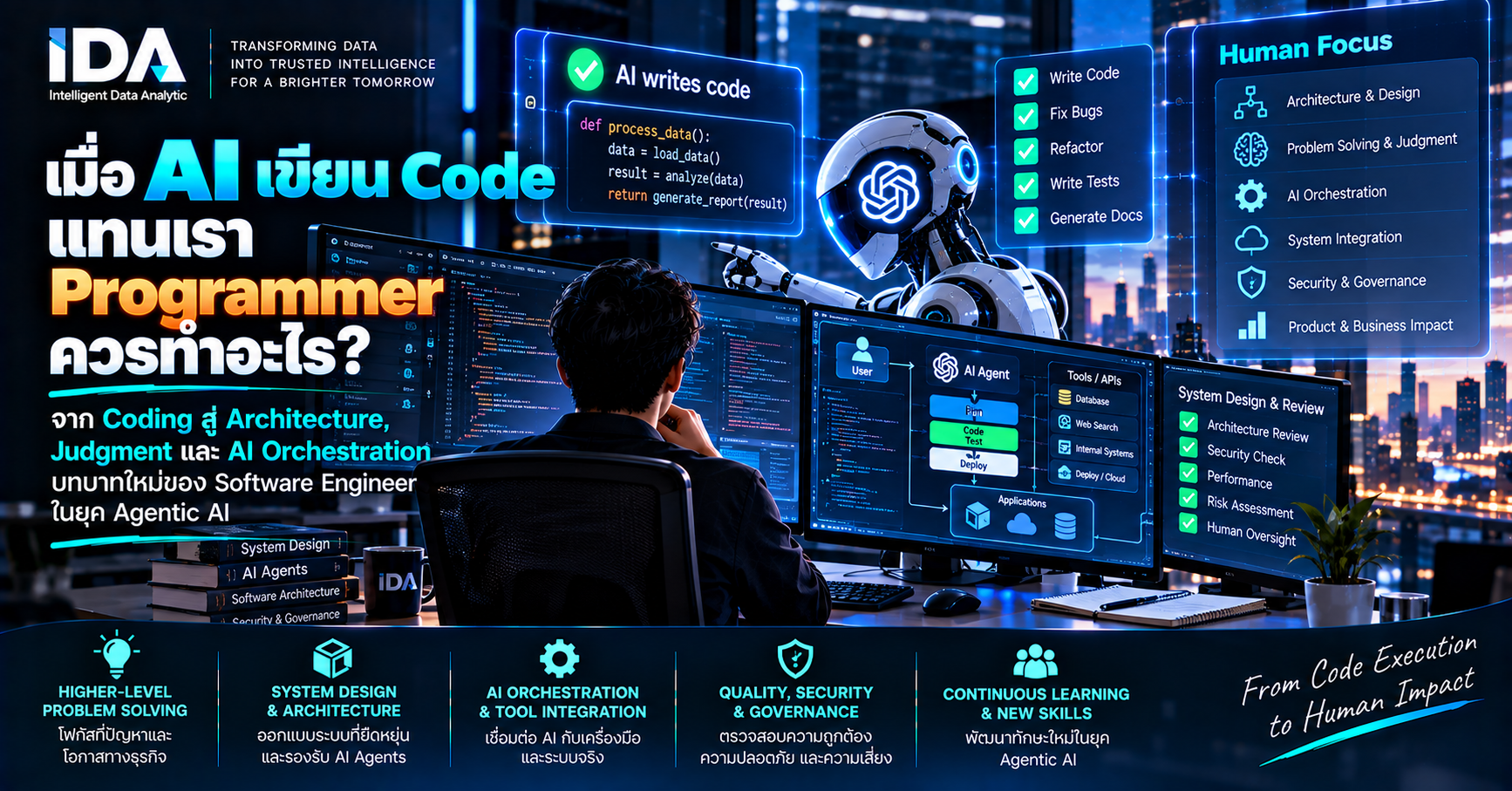
เมื่อ AI เขียน Code แทนเรา Programmer ควรทำอะไร?
จาก Coding สู่ Architecture, Judgment และ AI Orchestration — บทบาทใหม่ของ Software Engineer ในยุค Agentic AI
โลกของ Software Development กำลังเข้าสู่การเปลี่ยนแปลงครั้งใหญ่ ตลอดหลายสิบปีที่ผ่านมา ภาพของ Programmer คือคนที่ใช้เวลาส่วนใหญ่ไปกับการ เขียน Code Debug Search Documentation แก้ Error เขียน Test Review Pull Request และ Maintain Software
แต่ Generative AI และ AI Coding Agents กำลังเปลี่ยนสมการนี้อย่างรวดเร็ว งานที่เคยใช้เวลาหลายวันอาจลดเหลือไม่กี่ชั่วโมง Code หลายร้อยบรรทัดสามารถถูกสร้างภายในไม่กี่นาที AI สามารถอ่าน Codebase ค้นหาไฟล์ วิเคราะห์ Dependency แก้ Bug เขียน Test และดำเนินงานหลายขั้นตอนต่อเนื่องได้
คำถามสำคัญจึงไม่ใช่เพียง “AI จะเขียน Code ได้เก่งแค่ไหน?” แต่กลายเป็น “ถ้า AI เขียน Code ได้มากขึ้น แล้ว Programmer ควรใช้เวลาทำอะไร?” คำถามนี้อาจเป็นหนึ่งในคำถามสำคัญที่สุดของอาชีพ Software Engineer ในยุค Agentic AI
เมื่อ Productivity เพิ่ม 5 เท่า เราควรทำงานเพิ่ม 5 เท่าหรือไม่?
Scott Batson นักพัฒนาซอฟต์แวร์ เขียนถึงประสบการณ์ของตัวเองในบทความ What Should Programmers Do While the AI Writes Code? เขาเล่าว่า AI ทำให้งานบางอย่างที่เคยใช้เวลาหลายวันสามารถทำได้ภายในไม่กี่ชั่วโมง เขาประเมินว่า Productivity ของตัวเองเพิ่มขึ้นประมาณ 5 เท่า ปฏิกิริยาแรกจึงเป็นสิ่งที่เกิดขึ้นกับหลายคน ถ้าทำงานเร็วขึ้น 5 เท่า ก็ทำงานเพิ่ม 5 เท่า เขาเริ่มทำหลาย Project พร้อมกัน มี Pull Requests จำนวนมาก รับ Bug เพิ่ม เพิ่ม Feature เปิด AI Coding Loops เพิ่ม และใช้ AI ช่วยทั้ง Coding, Ticket และ Project Summary ดูเหมือน Productivity จะเพิ่มขึ้นมหาศาล แต่ผลที่เกิดขึ้นกลับเป็น Context เริ่มหาย Pull Requests ค้าง Code Review ไม่ละเอียด ความสนใจถูกกระจาย และสุดท้าย Burnout เร็วขึ้น นี่คือบทเรียนสำคัญสำหรับองค์กรที่กำลังนำ AI เข้าสู่ Software Development AI Productivity ≠ More Work Productivity ที่เพิ่มขึ้นไม่ควรถูกแปลงเป็น Workload ที่เพิ่มขึ้นในอัตราเดียวกันโดยอัตโนมัติ
คำถามที่ถูกต้องคือ เราจะเอา “เวลาที่ AI คืนให้” ไปทำอะไร?
นี่คือจุดที่แนวคิดของ Batson น่าสนใจมาก แทนที่จะเปิด AI Coding Agent อีกตัวเพื่อสร้างงานเพิ่ม เขาเริ่มใช้เวลาที่ได้คืนมากับสิ่งที่ก่อนหน้านี้ไม่มีเวลาทำ อ่าน Technical Documentation อย่างละเอียด อ่านบทความแทนการกระโดดไปหา Code Snippet เขียนความคิดของตัวเอง คุยกับเพื่อนร่วมงาน คุยกับ User ทำความเข้าใจ Feature และคิดถึง Product มากขึ้น ผลที่ได้คือ เขาอาจไม่ได้ส่งงานมากขึ้น 10 เท่า แต่สิ่งที่ส่งออกไป มีความหมายมากขึ้น นี่คือประเด็นสำคัญ AI ไม่ควรเพียงช่วยให้เราทำงานมากขึ้น แต่ควรช่วยให้มนุษย์มีเวลาคิดกับงานที่สำคัญขึ้น
จาก Writing Code สู่ Defining What Should Be Built
Software Engineering ไม่เคยมีคุณค่าอยู่ที่การพิมพ์ Code เพียงอย่างเดียว ก่อนจะมี Code ที่ดี ต้องตอบคำถามให้ได้ว่า เรากำลังแก้ปัญหาอะไร? ใครคือ User? Business Requirement คืออะไร? System ต้องทำอะไร? อะไรไม่ควรทำ? Edge Cases คืออะไร? Failure Mode คืออะไร? Security Requirement คืออะไร? เมื่อ AI เขียน Code ได้เร็วขึ้น ความสำคัญของคำถามเหล่านี้ยิ่งเพิ่มขึ้น เพราะ Bad Requirement → Fast AI → Bad Software Faster AI สามารถสร้างระบบผิดได้เร็วพอ ๆ กับสร้างระบบถูก ดังนั้นความสามารถสำคัญของ Software Engineer จะขยับจาก How to Code ไปสู่ What Should Be Built — and Why?
AI Coding กำลังย้าย Human Intelligence ไปไว้ต้นน้ำ
Software Development แบบเดิมอาจเป็น Requirement → Design → Human Coding → Test → Deploy เมื่อ AI Coding Agent เข้ามา Business Problem → Requirement → Architecture → AI Generate → Human Review → Test → Security → Approval → Deploy → Monitor เวลาที่ใช้กับ Manual Coding อาจลดลง แต่ความสำคัญของ Requirement Architecture Context Constraints Testing Security และ Review กลับเพิ่มขึ้น กล่าวอีกแบบคือ AI ลด Execution Cost แต่เพิ่มมูลค่าของ Judgment
Programmer กำลังเปลี่ยนจาก Coder เป็น AI Orchestrator
เมื่อ Coding Agent สามารถทำงานหลายขั้นตอนได้ บทบาทของ Programmer เริ่มเปลี่ยนอีกครั้ง จาก Human → Write Code เป็น Human → AI → Generate Code และกำลังไปสู่ Human → Define Goal → AI Agent → Plan → Code → Test → Review → Iterate
มนุษย์จึงค่อย ๆ ขยับขึ้นมาอยู่ในบทบาท Goal Setter → Architect → Orchestrator → Reviewer → Decision Maker นี่คือจุดเริ่มต้นของ Agentic Software Engineering
AI Agent ไม่ได้แค่เขียน Code
ความแตกต่างระหว่าง Coding Assistant กับ Coding Agent มีความสำคัญ Coding Assistant อาจทำงานในลักษณะ Prompt → Generate Code → Human Uses Code แต่ Coding Agent สามารถทำ Goal → Explore Repository → Understand Codebase → Plan → Modify Files → Run Tests → Observe Errors → Fix → Retest → Report และ Agent รุ่นใหม่สามารถทำงานต่อเนื่องเป็นเวลานานขึ้น ดังนั้นสิ่งที่มนุษย์กำลัง Delegate ไม่ใช่เพียง Typing แต่เริ่มเป็น Execution นี่ทำให้ Software Engineering เปลี่ยนจาก Human Execution + Machine Assistance ไปสู่ Human Direction + Machine Execution
Multi-Agent Software Engineering กำลังตามมา
ขั้นต่อไปไม่จำเป็นต้องมี AI Agent เพียงตัวเดียว Software Project อาจใช้ Agent หลายตัว Product Agent → Architecture Agent → Coding Agent → Testing Agent → Security Agent → Documentation Agent หรือ Coordinator Agent → Frontend Agent → Backend Agent → Database Agent → QA Agent → Security Agent Agents สามารถทำงาน Parallel ได้ จากเดิมที่ One Developer → One Task อาจเปลี่ยนเป็น One Engineer → Multiple AI Agents → Multiple Tasks นี่ทำให้ความสามารถในการ Orchestrate กลายเป็น Skill สำคัญ
แต่ More Agents ≠ More Productivity เสมอไป
การเปิด Coding Agents จำนวนมากพร้อมกันไม่ได้หมายความว่า Productivity จะเพิ่มแบบ Linear เพราะเมื่อ Agent เพิ่ม ก็เกิด More Outputs More Pull Requests More Decisions More Dependencies More Conflicts More Context และ More Things to Review จึงเกิดสิ่งที่เรียกได้ว่า AI Coordination Overhead หากมนุษย์ไม่สามารถ Review ได้ทัน AI Productivity อาจสร้าง Review Bottleneck แทน จาก Coding Bottleneck กลายเป็น Judgment Bottleneck
ปัญหาใหม่: AI สร้าง Code เร็วกว่าที่มนุษย์ตรวจได้
สมมติ Developer หนึ่งคนเคยเขียน Code 500 บรรทัดต่อวัน แต่ AI Agents สามารถสร้าง Code หลายพันบรรทัดในเวลาเดียวกัน คำถามคือ ใครจะอ่าน? ใครจะเข้าใจ? ใครจะ Review? ใครจะรับผิดชอบ? นี่ทำให้ Software Engineering ต้องเปลี่ยนจากการวัด Lines of Code หรือ จำนวน Pull Requests
ไปสู่ Quality → Reliability → Security → Business Value
AI-Generated Code ≠ Production-Ready Code
นี่คือหลักการสำคัญที่สุดข้อหนึ่ง AI-Generated Code ≠ Production-Ready Code
Code ที่ Compile ได้ ไม่ได้หมายความว่าปลอดภัย
Code ที่ Test ผ่าน ไม่ได้หมายความว่า Architecture ดี
Application ที่ Run ได้ ไม่ได้หมายความว่า Scale ได้
และ Feature ที่ทำงานได้ ไม่ได้หมายความว่าตรงกับ Business Requirement
AI-generated software อาจมีปัญหาเรื่อง Authentication Authorization Input Validation Secret Management Dependency Security API Security Error Handling Data Privacy Performance Scalability หรือ Maintainability ดังนั้น Workflow ไม่ควรเป็น Prompt → AI → Code → Production แต่ควรเป็น Requirement → Architecture → AI Generate → Human Review → Test → Security Scan → Integration Test → Approval → Deploy → Monitor
Programmer ต้องเก่ง Architecture มากขึ้น ไม่ใช่น้อยลง
AI สามารถสร้าง Function ได้ดีขึ้นเรื่อย ๆ แต่ Enterprise Software ไม่ใช่ Collection ของ Functions มันคือระบบที่มี Business Logic Data Flow Security Boundary Integration Dependency Performance Scalability Availability และ Operational Constraints
ดังนั้นเมื่อ AI ทำ Local Optimization ได้เก่งขึ้น มนุษย์ต้องมอง System-level Optimization มากขึ้น คำถามจึงเปลี่ยนจาก “Function นี้เขียนอย่างไร?” ไปเป็น “Logic นี้ควรอยู่ตรงไหนใน Architecture?”
Testing จะสำคัญขึ้นเมื่อเราไม่ได้เขียน Code เองทั้งหมด
เมื่อ Developer เขียน Code เอง เขามักมี Mental Model ของ Code นั้น แต่เมื่อ AI เป็นผู้สร้าง Code ส่วนใหญ่ Developer อาจไม่มี Mental Model โดยอัตโนมัติ ดังนั้น Test จึงไม่ได้เป็นเพียง Quality Assurance แต่เป็น Evidence ว่า AI Output ทำสิ่งที่เราตั้งใจ Workflow จึงควรเปลี่ยนเป็น AI Generate → Test → Evidence → Human Verification ไม่ใช่ AI Generate → Looks Good → Merge
Security ต้อง Shift Left มากกว่าเดิม
AI ทำให้การสร้าง Software เร็วขึ้น แต่ Security Team ไม่สามารถเป็น Gate สุดท้ายที่รออยู่ก่อน Production เพียงอย่างเดียว Security ต้องเข้าไปอยู่ใน Agentic SDLC Requirement → Threat Modeling → Architecture → AI Coding → SAST → Dependency Scan → Secret Scan → Testing → Security Review → Deploy → Runtime Monitoring และ Coding Agent เองต้องอยู่ภายใต้ Scoped Permission Repository Access Control Secret Management Network Control Sandbox Logging และ Human Approval โดยเฉพาะก่อน Action ที่มีผลกระทบสูง
Human Permission ≠ AI Agent Permission
หาก Developer มีสิทธิ์ Deploy Production ไม่ได้หมายความว่า Coding Agent ของ Developer ควรมีสิทธิ์ Deploy Production โดยอัตโนมัติ Architecture ที่ปลอดภัยกว่าคือ Developer Identity → Delegated Agent Identity → Scoped Repository → Approved Tools → Proposed Change → Test → Human Approval → Deploy → Audit Log ไม่ใช่ Developer Login → AI Agent → Full Developer Permission → Production หลักการคือ Delegate the Task — Not the Entire Authority.
แล้ว Programmer ควรทำอะไรระหว่างที่ AI เขียน Code?
คำตอบไม่ควรเป็น “เปิด Agent อีกตัว” เสมอไป
เวลาที่ AI คืนให้ควรถูกลงทุนกับงานที่สร้าง Leverage สูงกว่า เช่น
Understand the Business เข้าใจว่าธุรกิจต้องการแก้ปัญหาอะไร
Talk to Users เข้าใจ Pain Point จริง ไม่ใช่ Requirement บนเอกสารเพียงอย่างเดียว
Design Architecture คิดเรื่อง System, Integration, Security และ Scalability
Review AI Output อย่าเชื่อ Code เพียงเพราะดูดีหรือ Compile ผ่าน
Design Better Tests สร้าง Evidence ว่าระบบทำสิ่งที่ควรทำ
Think About Failure ถามว่าอะไรจะเกิดขึ้นเมื่อ System, Network, Data หรือ User ไม่ทำงานตามที่คาด
Improve Security คิดเหมือน Defender และ Attacker
Write and Document อธิบายเหตุผล Architecture และ Decision ให้ทีมเข้าใจ
Learn ใช้เวลาที่ประหยัดได้เพื่อเข้าใจ Technology ให้ลึกกว่าเดิม และที่สำคัญ Think
อย่าปล่อยให้ Coding Skill กลายเป็น Atrophy
อีกความเสี่ยงหนึ่งคือ Skill Atrophy หาก Developer ไม่เขียน Code เองเลยเป็นเวลานาน ความเข้าใจระดับลึกอาจลดลง และเมื่อเกิด Production Incident ที่ซับซ้อน Developer อาจไม่มี Fluency เพียงพอในการ Debug ดังนั้น AI Augmentation ที่ดีไม่ควรทำให้มนุษย์สูญเสียความสามารถในการเข้าใจระบบ
หลักการคือ Delegate Execution — Preserve Understanding
จาก Prompt Engineering สู่ Context Engineering
ในช่วงแรกของ Generative AI ทุกคนพูดถึง Prompt Engineering แต่ Coding Agent ที่ทำงานกับระบบจริงต้องการมากกว่า Prompt Agent ต้องเข้าใจ Architecture Coding Standards Business Rules API Contracts Data Models Security Policies Testing Requirements และ Definition of Done ดังนั้น Skill ใหม่คือ Context Engineering คือการสร้าง Environment ที่ทำให้ AI มี Context เพียงพอที่จะทำงานได้ถูกต้อง จาก Write Better Prompt ไปสู่ Provide Better Context
และจาก Context Engineering สู่ Judgment Engineering
แม้ AI จะได้รับ Context ดีเพียงใด สุดท้ายยังต้องมีคนตัดสินว่า Output ควรถูกนำไปใช้หรือไม่ นี่คือ Judgment Engineering ความสามารถในการ ตั้งคำถามที่ถูก กำหนด Constraint ประเมิน Output ตรวจ Evidence มองเห็น Trade-off ประเมิน Risk และ ตัดสินใจ เมื่อ AI สามารถ Generate ได้เร็วมาก คุณค่าของมนุษย์จึงย้ายจาก Generation ไปสู่ Evaluation และจาก Evaluation ไปสู่ Judgment
บทวิเคราะห์ IDA: AI ไม่ได้ทำให้ Software Engineer สำคัญน้อยลง แต่เปลี่ยนตำแหน่งที่สร้างคุณค่า
ในมุมมองของ Intelligent Data Analytic (IDA) การมองว่า AI เขียน Code ได้ → Programmer ไม่จำเป็น เป็นการมอง Software Engineering แคบเกินไป เพราะ Code เป็นเพียงส่วนหนึ่งของ Software Engineering คุณค่าของ Engineer อยู่ใน Chain ที่ใหญ่กว่า Business Problem → Requirement → Architecture → Design → Code → Test → Security → Integration → Deployment → Operations → Business Impact AI กำลัง Automate ส่วนของ Chain มากขึ้น แต่ไม่ได้ทำให้ Chain หายไป ตรงกันข้าม เมื่อ Execution เร็วขึ้น ความผิดพลาดก็สามารถ Scale ได้เร็วขึ้นเช่นกัน
AI ทำให้ Execution กลายเป็น Commodity และ Judgment กลายเป็น Premium
นี่คือ Pattern เดียวกับที่เกิดใน Marketing และ Knowledge Work เมื่อทุกคนสามารถเข้าถึง AI Model ที่มี Capability ใกล้เคียงกัน การสร้าง Code อย่างรวดเร็วจะค่อย ๆ กลายเป็น Baseline Competitive Advantage จึงย้ายจาก Who Can Code Faster? ไปสู่ Who Can Build the Right System?
และต่อไปยัง Who Can Make Better Engineering Decisions? ดังนั้น AI makes execution cheaper — but makes good judgment more valuable.
Software Engineer รุ่นใหม่ต้องมี 7 ความสามารถ
Software Engineer ในยุค Agentic AI ควรพัฒนาตัวเองจาก Coding Skill เพียงอย่างเดียวไปสู่ Business Understanding — เข้าใจ Problem และ Business Impact System Architecture — มองระบบทั้งภาพ AI Orchestration — บริหาร Agent และ Workflow Context Engineering — ให้ Context ที่ถูกต้องกับ AI Verification & Testing — ตรวจสอบ Output ด้วย Evidence Security Engineering — เข้าใจ Risk และ Boundary Human Judgment — ตัดสิน Trade-off และรับผิดชอบต่อผลลัพธ์ กล่าวอีกแบบคือ Coder → Engineer → Architect → AI Orchestrator → Decision Maker
KPI ของ Software Team ก็ต้องเปลี่ยน
หาก AI ทำให้สร้าง Code ได้มากขึ้น การวัด Productivity ด้วย Output Volume เพียงอย่างเดียวจะยิ่งอันตราย จำนวน Lines of Code Pull Requests Commits หรือ Features ไม่ควรเป็นเป้าหมายสุดท้าย สิ่งที่องค์กรควรวัดคือ Lead Time → Deployment Quality → Defect Rate → Security → Reliability → User Value → Business Impact เป้าหมายไม่ใช่ More Code แต่คือ Better Software, Faster
จาก Software Development Lifecycle สู่ Agentic SDLC
อนาคตของ Software Engineering อาจเปลี่ยนจาก Human Requirement → Human Design → Human Code → Human Test → Deploy ไปสู่ Human Intent → AI-assisted Requirement → Human Architecture → AI Agents → Automated Test → Security Validation → Human Approval → Deployment → AI Monitoring → Human Accountability มนุษย์จะไม่ได้หายไปจาก Loop แต่ตำแหน่งของมนุษย์จะเปลี่ยน จาก Execution Layer ขึ้นไปอยู่ที่ Intent + Architecture + Judgment + Governance Layer
CEO, CIO และ CTO ต้องระวัง Productivity Trap
สำหรับผู้บริหาร สิ่งที่อันตรายคือการเห็น AI Coding Productivity เพิ่มขึ้นแล้วตั้งเป้าว่า “ถ้า Developer เร็วขึ้น 5 เท่า เราควรผลิต Software เพิ่ม 5 เท่า” เพราะอาจสร้าง More Code → More Complexity → More Technical Debt → More Security Risk → More Maintenance
คำถามที่เหมาะสมกว่าคือ “เราจะใช้ Productivity ที่เพิ่มขึ้นเพื่อสร้าง Business Value ที่สูงขึ้นอย่างไร?” บางครั้งคำตอบอาจไม่ใช่สร้าง Feature เพิ่ม แต่อาจเป็น ลด Technical Debt เพิ่ม Test Coverage ปรับ Architecture เพิ่ม Security ปรับ User Experience แก้ Legacy System
หรือ ทำสิ่งที่ก่อนหน้านี้ไม่มี Resources เพียงพอ
จาก Developer Productivity สู่ Engineering Intelligence
ในมุมมองของ IDA เป้าหมายสุดท้ายจึงไม่ควรหยุดอยู่ที่ AI Coding Productivity แต่ควรไปสู่ Engineering Intelligence คือความสามารถขององค์กรในการใช้ AI + Data + Engineering Knowledge + Human Judgment เพื่อสร้าง Software ที่ เร็วขึ้น มีคุณภาพขึ้น ปลอดภัยขึ้น Maintain ได้ และสร้าง Business Impact ได้จริง
บทสรุป: AI ไม่ได้เอาการคิดออกจาก Programming — มันกำลังเอาการพิมพ์ออก
เมื่อ AI เขียน Code ได้มากขึ้น คำถามจึงไม่ใช่ว่า “Programmer ยังต้องเขียน Code หรือไม่?” แต่คือ “Programmer ควรใช้ Intelligence ของตัวเองตรงไหน?” คำตอบกำลังขยับจาก Typing → Thinking Coding → Architecture Execution → Orchestration Generation → Verification Prompting → Context Engineering Output → Judgment และ Developer Productivity → Business Impact ดังนั้น Software Engineer ในอนาคตอาจไม่ได้ถูกวัดจากว่า เขียน Code ได้เร็วแค่ไหน แต่จากว่า สามารถกำหนด Problem ได้ดีแค่ไหน ออกแบบ System ได้ดี แค่ไหน ควบคุม AI Agents ได้ดีแค่ไหน ตรวจสอบ Output ได้ดีแค่ไหน มองเห็น Risk ได้เร็วแค่ไหน และท้ายที่สุด ตัดสินใจได้ดีแค่ไหนว่า Software อะไรควรถูกสร้างขึ้นตั้งแต่แรก
ในมุมมองของ Intelligent Data Analytic (IDA) The future of software engineering is not less human thinking. It is less human typing and more human judgment.
และเมื่อ AI สามารถเขียน Code ได้เร็วขึ้นเรื่อย ๆ สิ่งที่มีมูลค่ามากขึ้นจะไม่ใช่เพียงความสามารถในการ Write Code แต่คือความสามารถในการ Think → Design → Orchestrate → Verify → Secure → Decide เพราะในยุค Agentic AI AI can generate the code — but humans must remain accountable for the system.
บทวิเคราะห์โดย Intelligent Data Analytic (IDA)
AI Intelligence • AI Software Engineering • Agentic AI • Cybersecurity • AI Security • AI Governance • Strategic Decision Support
อาจารย์ ปรเมศร์ เพียรสกุล
ประธานเจ้าหน้าที่บริหาร (Chief Executive Officer)
บริษัท อินเทลลิเจนท์ ดาต้า อนาไลติกส์ จำกัด (IDA)
CEO | AI, Cybersecurity & Digital Risk Strategist
Digital Crisis & Reputation Management
Certified AI Governance Professional (AIGP) | Data Protection Officer (DPO)
เกี่ยวกับผู้เขียน
Poramate Piansakul
Professional Certifications
Transforming Data into Trusted Intelligence for Executive Decision-Making
#AICoding #SoftwareEngineer #AgenticAI #AIOrchestration #FutureOfProgramming